
 EN
EN
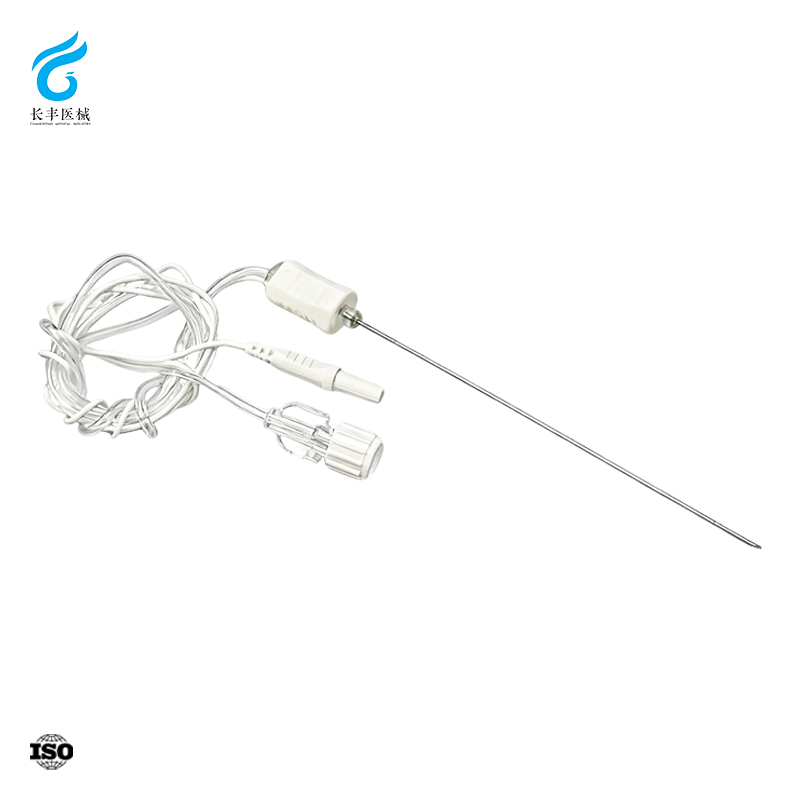
How the Plexus Stimulation Needle Enables Real-Time, Targeted Nerve Localization
Electrolocation Mechanics: Converting Motor Response into Precise Anatomic Feedback
Electrolocation works by sending a small amount of electricity (about 0.2 to 0.5 milliamps) through a special needle called a plexus stimulator. When this happens near a nerve, muscles will contract - for instance, we often see the quadriceps muscle twitch during lumbar block procedures. These muscle twitches give doctors clear signs that they're getting close to the right spot before actually injecting anesthesia. Instead of guessing how deep something is based on landmarks alone, electrolocation turns those tricky nerve signals into things doctors can actually see or feel. Studies have found that using this method makes the procedure successful on the first try around 32% more often than just relying on traditional landmark techniques. That's pretty significant when considering patient comfort and procedural efficiency.
Insulated Shaft Design: Ensuring Focal Current Delivery and Minimizing False Positives
A fully insulated needle shaft keeps electrical current flowing only through the exposed conductive tip, which is usually around 1 mm long or shorter. This stops electricity from spreading out into nearby tissues. The design creates stimulation that radiates from a very small area about 1 to 2 mm wide. When this happens, muscle reactions accurately show how close the needle tip actually is to nerves, instead of picking up signals from farther away or indirectly activated areas. Because of this focused approach, doctors see fewer false positive readings when stimulating nerves they didn't target. Plus, accidental activation of nearby structures like blood vessels drops significantly too. Studies published in Anesthesia & Analgesia back this up, showing a reduction of about 41% in these unwanted activations.
Clinical Evidence Supporting Stimulation-Confirmed Placement in Plexus Blocks
First-Pass Success Rates: Stimulation Needle vs. Ultrasound-Only Guidance
Combining the plexus stimulation needle with ultrasound technology actually boosts first pass success rates for brachial plexus blocks somewhere between 15 to 20 percent compared to just using ultrasound by itself. A recent multi center research project found that about 88 percent of those tricky supraclavicular blocks managed to get the anesthetic spread right on the very first try when doctors used electrolocation feedback during the procedure. The whole process becomes much smoother too. Doctors don't need to keep moving the needle around so much, which cuts down the average time needed for the procedure by roughly seven minutes. Patients also report feeling significantly less discomfort overall, scoring their pain at an average of 2.3 on the visual analog scale versus 4.1 without this technique. These results clearly show why many medical professionals are starting to prefer this combination method both for how well it works clinically and because patients generally tolerate it better.
Motor Response Thresholds (0.2–0.5 mA) as Reliable Predictors of Block Onset and Duration
A sustained motor response at ≤0.5 mA is strongly associated with optimal block performance. Data from a 2023 meta-analysis demonstrate that stimulation within this range correlates with faster sensory onset, longer duration, and higher procedural success:
| Threshold (mA) | Sensory Onset (min) | Duration (hrs) | Success Rate |
|---|---|---|---|
| 0.2–0.5 | 8.2 ± 1.5 | 14.3 ± 2.1 | 94% |
| >0.5 | 12.7 ± 2.3 | 9.8 ± 1.7 | 76% |
Stimulation at ≤0.5 mA reflects intimate needle-nerve contact, accelerating sensory blockade onset by 40% and reducing required local anesthetic volume by 25%—without compromising analgesic duration.
Optimizing Workflow: Integrating the Plexus Stimulation Needle with Modern Neurostimulators
When the plexus stimulation needle works together with today's neurostimulators, it completely changes how regional anesthesia is done, making the whole process much more predictable and efficient. The system has this special calibration feature that matches where the needle is placed with what comes out of the stimulator. This means doctors can adjust the electrical current exactly right without having to guess and check like they used to. For medical professionals, this results in finding nerves consistently every time, which cuts down on how long procedures take and also eases the mental burden during surgery. Traditional methods relying just on landmarks or only using ultrasound simply don't offer this kind of reliability and speed.
Compatibility Guidelines: Matching Needle Specifications to Stimulator Output (2–5 mA Range)
Optimal performance requires alignment between needle engineering and neurostimulator specifications. Needles designed for the standard 2–5 mA therapeutic range feature:
- Insulation thickness of 0.1–0.3 mm to prevent current leakage into non-target tissues
- Precision-etched conductive tips ≤1 mm long, supporting reliable stimulation at thresholds as low as 0.2 mA
- Low-impedance surface coatings that maintain signal fidelity—even when traversing dense fascial planes
Mismatched equipment increases the risk of false negatives or tissue injury. Studies show aligned specifications reduce current adjustment time by 40%, while integrated shock protection circuits in newer stimulators further enhance safety during dynamic needle advancement.
Protocol-Specific Applications Across Major Plexus Targets
Lumbar Plexus: Quadriceps Twitch as the Gold-Standard Endpoint for Adequacy
When performing lumbar plexus blocks, getting a quadriceps muscle twitch at around 0.2 to 0.5 milliamps basically tells us the needle is positioned correctly near those L2 through L4 nerve roots. The twitch itself has become pretty much standard as the main indicator that the block will work well. Why? Well, studies show about 95 out of 100 times when we see this twitch, patients experience good numbness coverage. Plus, doctors can actually cut down on how much numbing medicine they need by roughly 30 percent without hurting effectiveness. This specific response pattern also means less chance of accidentally damaging the femoral nerve during insertion, plus the effects kick in faster than other methods. Most experienced practitioners consider this twitch test to be one of the best ways to check if everything went right with these types of nerve blocks.
Brachial Plexus: Differential Stimulation Protocols for Axillary vs. Supraclavicular Approaches
The stimulation settings really need to match what's going on anatomically and with each patient's specific risks. When doing axillary blocks, we look for those distal movements like fingers bending or wrists flexing when using currents between 0.3 and 0.8 mA. These responses tell us we're near either the median or ulnar nerves. With supraclavicular blocks, if someone gets twitching in their diaphragm area or chest muscles at over 0.5 mA, that means we're probably not hitting the phrenic nerve. But watch out for readings under 0.2 mA during interscalene techniques because this actually raises the chance of accidentally injecting directly into a nerve. Studies from Regional Anesthesia and Pain Medicine in 2023 showed that sticking to these standard ranges cuts down on blood vessel punctures by about 40%. Makes sense really, since following these guidelines leads to better results overall with fewer complications down the road.
FAQs
What is the main advantage of using a plexus stimulation needle?
The main advantage is the improved accuracy in localizing nerves, resulting in a higher success rate for nerve blocks and reduced patient discomfort.
How does insulation in the needle design help?
Insulation ensures that the electrical current is focused only at the needle tip, reducing false positives and minimizing activation of non-target tissues.
Can the plexus stimulation needle be used with ultrasound?
Yes, combining the plexus stimulation needle with ultrasound can significantly increase the first-pass success rates of nerve blocks.
What are the optimal motor response thresholds?
For most procedures, maintaining a motor response at 0.2 to 0.5 mA is ideal for ensuring effective nerve blocks.
Table of Contents
- How the Plexus Stimulation Needle Enables Real-Time, Targeted Nerve Localization
- Clinical Evidence Supporting Stimulation-Confirmed Placement in Plexus Blocks
- Optimizing Workflow: Integrating the Plexus Stimulation Needle with Modern Neurostimulators
- Protocol-Specific Applications Across Major Plexus Targets
- FAQs