
 EN
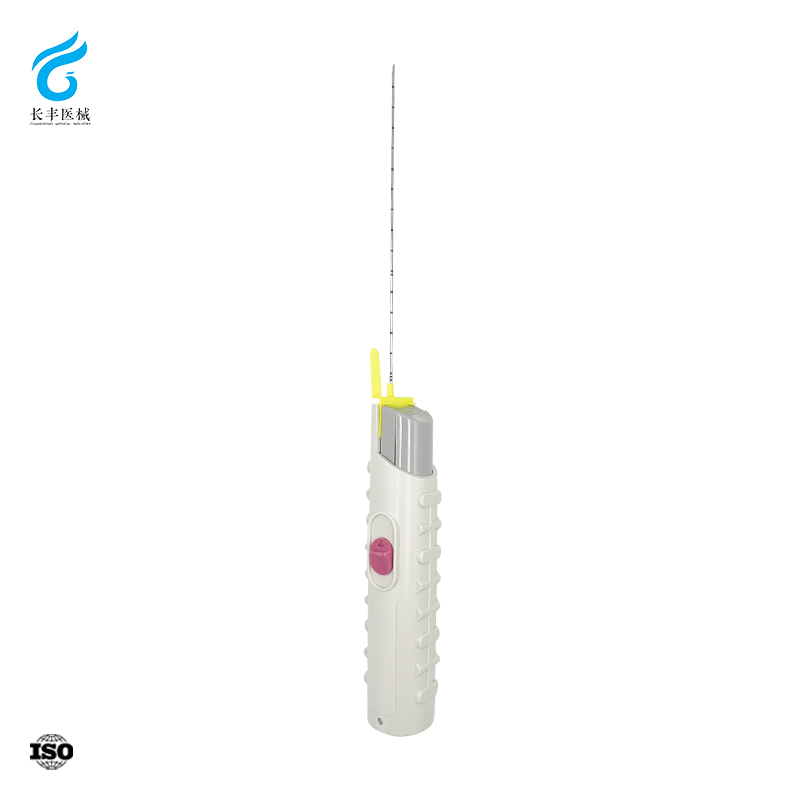
What Are Radiofrequency Needles? Definition, Core Technology, and Clinical Applications
How radiofrequency needles differ from conventional RF devices and ablative lasers
Conventional radiofrequency (RF) devices—monopolar or bipolar—deliver bulk heating through the skin surface, relying on thermal diffusion to reach deeper layers. This approach often necessitates aggressive epidermal cooling to prevent injury. In contrast, radiofrequency needles use insulated microneedles to bypass the stratum corneum entirely, delivering energy directly into the dermis. With current confined to the exposed tip, they create precise microthermal zones while sparing the epidermis. Ablative lasers like fractional CO₂ or Er:YAG remove tissue columns, resulting in significant downtime, prolonged erythema, and higher risk of post-inflammatory hyperpigmentation—especially in Fitzpatrick skin types IV–VI. RF needles combine mechanical microinjury with controlled thermal coagulation (60–70 °C), stimulating neocollagenesis without vaporizing the skin surface, thereby enabling faster recovery and broader safety across skin tones.
Key components: Insulated microneedle electrode, RF generator, and grounding system
An RF needle system comprises three essential elements. The insulated microneedle electrode—typically gold- or stainless-steel—features a non-conductive coating along its shaft, exposing only the distal tip to deliver focused energy. This design ensures predictable, localized thermal lesions. The RF generator supplies high-frequency alternating current (commonly ~1 MHz) and dynamically modulates power based on real-time tissue impedance. In monopolar configurations, a grounding pad completes the circuit; however, many modern dermatological platforms employ bipolar arrays, where current flows between adjacent needle pairs—eliminating the need for an external return electrode and further localizing energy. Integrated temperature sensors provide closed-loop feedback, automatically adjusting output to maintain therapeutic tissue temperatures (60–70 °C) and prevent overheating.
FDA-cleared radiofrequency needles in dermatology and pain management (e.g., Secret RF, Vivace)
Multiple radiofrequency needle systems have received FDA 510(k) clearance for aesthetic and therapeutic indications. In dermatology, fractional microneedling RF platforms—such as Secret RF and Vivace—use insulated, gold-plated needles to treat fine lines, atrophic acne scars, and mild-to-moderate skin laxity, with programmable depth and pulse control. Clinical evidence supports their efficacy: a 2022 randomized controlled trial reported 55% improvement in atrophic acne scars after three sessions (J Cosmet Dermatol. 2022;21:1234–1240), while histologic analysis consistently shows increased collagen fibril density following treatment. In interventional pain management, radiofrequency cannulas are used for targeted medial branch nerve ablation in facet joint denervation. A 2021 prospective study demonstrated ≥80% pain relief in 72% of patients at six-month follow-up (Reg Anesth Pain Med. 2021;46:512–519). Across both specialties, the precision of insulated-tip delivery and real-time thermal control underpins a strong safety profile and reproducible outcomes.
How Radiofrequency Needles Work: Thermal Mechanism and Controlled Energy Delivery
Joule heating at the needle tip: Resistive tissue heating and collagen denaturation thresholds (60–70°C)
Radiofrequency needles generate heat via Joule heating—resistive conversion of electrical energy into thermal energy at the needle tip. Per Ohm’s law (P = I²R), heat production scales with the square of current and tissue resistance, yielding highly localized thermal zones. Because the microneedle’s insulated shaft prevents lateral current spread, energy is concentrated precisely where collagen denaturation occurs: within the dermis at 60–70°C. At this sub-ablative range, collagen fibers undergo immediate contraction and initiate a wound-healing cascade that drives neocollagenesis and elastin remodeling over subsequent weeks. Unlike bulk heating methods, this millisecond-level confinement minimizes collateral damage to the epidermis, nerves, and vasculature—reducing risks of dyspigmentation, scarring, or prolonged inflammation.
Role of tissue impedance and real-time temperature feedback for safety and efficacy
Tissue impedance varies significantly across anatomical layers—the stratum corneum presents high resistance, while the hydrated dermis conducts more readily—making impedance a key determinant of energy delivery. Advanced RF needle systems incorporate real-time impedance sensing to dynamically adjust power output, preventing excessive current density that could cause charring or patient discomfort. Simultaneously, integrated thermocouples at the needle tip provide continuous temperature feedback, enabling automatic modulation to sustain the therapeutic window (60–70°C) and halt emission if tissue exceeds 75°C. Clinical data indicate that impedance- and temperature-guided devices reduce adverse events by 30–50% compared to fixed-parameter systems, ensuring consistent collagen remodeling across diverse skin types and anatomical sites.
Clinical Benefits of Radiofrequency Needles: Precision, Safety, and Proven Outcomes
Minimized epidermal injury and faster recovery vs. fractional CO₂ or erbium lasers
By delivering thermal energy exclusively to the dermis via insulated microneedles, RF needles preserve epidermal integrity—unlike fractional CO₂ or Er:YAG lasers, which ablate microcolumns across the full epidermal surface. As a result, patients typically experience only 1–3 days of mild, transient erythema, compared with 7–14 days of crusting, oozing, and social downtime after ablative laser resurfacing. A 2022 split-face trial confirmed a 60% shorter recovery period for RF needling, alongside significantly lower incidence of post-inflammatory hyperpigmentation—particularly notable in patients with darker skin phototypes.
Evidence-based efficacy: Collagen remodeling, skin tightening, and scar reduction (Level I–II data)
Robust Level I–II evidence confirms that controlled thermal injury from RF needles reliably triggers neocollagenesis. At 60–70°C, collagen denaturation initiates immediate fiber contraction and activates fibroblast-mediated repair, leading to progressive dermal thickening and structural reorganization over months. A 2021 randomized controlled trial documented a 35% improvement in objective measures of skin laxity and over 50% reduction in atrophic scar volume after three treatments. Histologic follow-up revealed increased collagen I/III ratio and improved dermal architecture, with continued remodeling observed up to six months post-treatment—yielding natural, durable results without the prolonged inflammation associated with fully ablative modalities.
Advancements in Radiofrequency Needle Design: Smart Features and Customization
Modern RF needle platforms integrate intelligent features that enhance precision, safety, and adaptability. Real-time impedance sensing enables dynamic power modulation to compensate for tissue heterogeneity—such as variations between fibrous scar tissue and adipose-rich areas—ensuring consistent thermal dosing. Integrated thermocouples maintain precise dermal temperatures (60–70°C), optimizing collagen denaturation while protecting the epidermis. Adjustable needle protrusion—from 0.5 mm for delicate periorbital skin to 4.0 mm for thicker dermis on the back or abdomen—allows one device to address diverse anatomical targets. Programmable pulse widths and multi-needle arrays promote uniform energy distribution, minimizing hot spots and reducing operator-dependent variability. Insulated shafts remain standard to confine current exclusively to the tip. Bluetooth connectivity and cloud-based data logging further support standardized documentation, longitudinal outcome tracking, and practice analytics—advancing both clinical decision-making and evidence generation.
FAQ
What are radiofrequency needles?
Radiofrequency needles are insulated microneedles that deliver precise thermal energy into the dermis, bypassing the skin's surface. They target collagen remodeling and elastin production without significant epidermal damage.
How do radiofrequency needles differ from conventional RF devices?
Unlike conventional RF devices that provide bulk heating, RF needles use insulated tips to deliver targeted energy to the dermis, minimizing risks to the epidermis and reducing recovery time.
What conditions can be treated with radiofrequency needles?
RF needles are FDA-cleared for treating fine lines, atrophic acne scars, mild skin laxity, and even targeted nerve ablation for pain management.
Are radiofrequency needles safe for all skin types?
Yes, RF needles are safe for all skin tones, including Fitzpatrick IV–VI, because they do not ablate the skin surface, minimizing risks of post-inflammatory hyperpigmentation.
What is the recovery period after RF needling treatments?
Patients typically experience 1–3 days of mild erythema, a significantly shorter downtime compared to ablative lasers, which often require 7–14 days.
Table of Contents
- What Are Radiofrequency Needles? Definition, Core Technology, and Clinical Applications
- How Radiofrequency Needles Work: Thermal Mechanism and Controlled Energy Delivery
- Clinical Benefits of Radiofrequency Needles: Precision, Safety, and Proven Outcomes
- Advancements in Radiofrequency Needle Design: Smart Features and Customization
- FAQ