
 EN
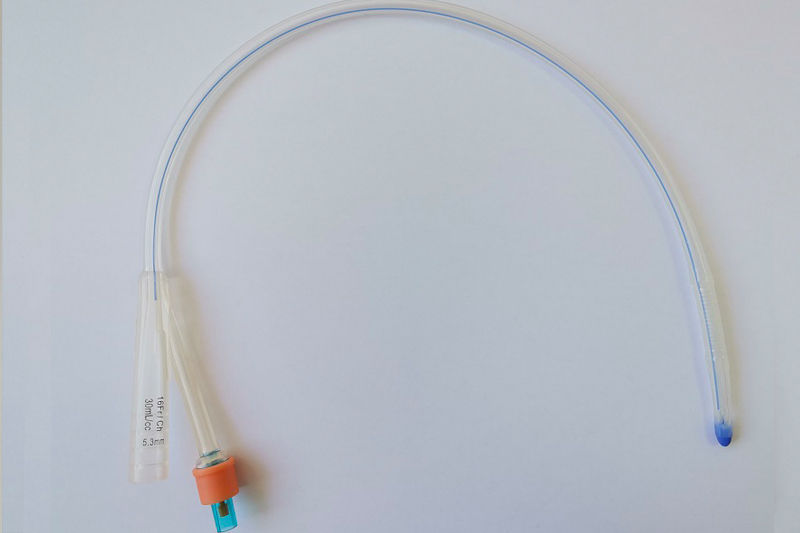
Urinary Latex Catheter Material Properties and Biocompatibility Performance
Elasticity, tensile strength, and surface friction: How latex physical properties impact urethral trauma and dwell time tolerance
Latex’s inherent elasticity allows urinary catheters to conform gently to urethral contours—reducing insertion force and minimizing mucosal tearing. Its tensile strength resists kinking or collapse under suction, maintaining lumen patency during extended use. However, the uncoated natural rubber surface exhibits higher friction coefficients, increasing the risk of microscopic abrasions during manipulation or patient movement. Silicone or PTFE coatings are widely applied to lower surface friction and improve biocompatibility, significantly reducing traumatic urethritis incidence. Over time, urine exposure softens the latex matrix, potentially increasing surface tackiness and mucosal adhesion upon removal. Because catheter-induced trauma is a leading cause of patient discomfort and early device replacement, effective friction management—balancing high elastic recovery with low-friction surface engineering—is essential. When paired with proper insertion technique and incontinence care protocols, modern coated latex catheters support safe short-term dwell times consistent with clinical guidelines.
Natural rubber protein content and its direct correlation with mucosal irritation and early removal rates in acute care
Natural latex retains residual proteins—primarily hevein isoforms—that can leach into urine and contact the urothelium. Even in non-allergic patients, these soluble proteins trigger localized inflammation: mucosal erythema, edema, and increased epithelial shedding often manifest as urgency or dysuria. In acute care, this irritation frequently shortens tolerated dwell time; studies link high-protein-eluting catheters to unplanned early removal rates exceeding 15%. While manufacturing leaching processes reduce extractable protein levels, complete elimination remains technically challenging. Clinicians must therefore weigh latex’s cost-effectiveness against biocompatibility-related discontinuation risks. Best practice includes documenting prior catheter tolerance and implementing vigilant monitoring for signs of mucosal distress—supporting timely intervention and reducing the cascade of urethral trauma, re-catheterization, and iatrogenic infection.
Latex Allergy Risk Management and Regulatory Compliance Requirements
Type I hypersensitivity prevalence in catheterized patients and mandatory screening protocols per CDC and AUA guidelines
Type I hypersensitivity to natural rubber latex poses a serious safety concern during urinary catheterization. Population studies estimate 1–3% of catheterized patients experience acute urticaria, rhinitis, or anaphylaxis—with prevalence rising above 10% in high-exposure cohorts such as individuals with spina bifida (2020 meta-analysis). Both the CDC’s 2019 Guideline for Prevention of Catheter-Associated Urinary Tract Infections and the AUA’s 2020 Best Practice Statement mandate rigorous pre-procedure allergy screening. This requires systematic assessment of patient history for reactions to latex-containing products—including gloves, balloons, or prior catheters. Any reported reaction necessitates immediate selection of a latex-free alternative. Electronic health record alerts and standardized checklists are recommended to ensure consistent compliance and prevent unrecognized sensitization from triggering adverse events during catheter dwell.
Navigating FDA 510(k) clearance vs. EU MDR Annex I: Key documentation and labeling expectations for urinary latex catheters
Regulatory pathways for urinary latex catheters differ markedly between the U.S. and EU. The FDA’s 510(k) process focuses on demonstrating substantial equivalence to a legally marketed predicate device, whereas the EU MDR’s Annex I mandates comprehensive clinical evidence of safety and performance. Effective risk mitigation begins with selecting devices that meet jurisdiction-specific standards—particularly regarding allergen disclosure and biocompatibility validation.
| Requirement Area | FDA 510(k) (United States) | EU MDR Annex I (European Union) |
|---|---|---|
| Premarket Submission | 510(k) notification with data on elasticity, tensile strength, and extractable protein levels. | Technical documentation per Annex II, clinical evaluation report, ISO 10993-compliant biocompatibility testing, and formal risk management file. |
| Labeling Mandates | Must state “Contains natural rubber latex” and list material composition; contraindication for latex allergy required. | Requires UDI, IFU in all official EU languages, and allergen warnings aligned with General Safety and Performance Requirements (GSPR) 10.4.5. |
| Allergen Declaration | Package marking and labeling must disclose latex content; protein quantification encouraged but not universally mandated. | Explicit warning if protein levels exceed clinically relevant thresholds; CMR substance declaration required where applicable. |
| Post-Market | Adverse event reporting via MedWatch. | Ongoing post-market surveillance (PMS), post-market clinical follow-up (PMCF), and reporting to national competent authorities. |
While the FDA pathway emphasizes predicate-based equivalence, the MDR enforces a lifecycle approach—demanding stronger clinical justification and continuous real-world evidence. Procurement specialists should verify clear allergen labeling and confirm suppliers can provide technical documentation aligned with target-market regulations.
Evidence-Based Selection: Urinary Latex Catheters Versus Alternatives in Compliance-Focused Care
CAUTI incidence, insertion success, and documentation adherence benchmarks across latex, silicone, and hydrophilic catheters (Joint Commission‑aligned outcomes)
Selecting a urinary latex catheter requires benchmarking against Joint Commission infection-prevention standards—and recognizing trade-offs across clinical, operational, and regulatory domains. A randomized controlled trial comparing bacterial colonization found significantly higher colony counts with latex versus silicone catheters, reinforcing its association with elevated CAUTI risk. Insertion dynamics also diverge: latex’s elasticity supports easier initial passage, yet its higher surface friction contributes to urethral trauma; silicone’s stiffness may challenge first-attempt success but offers superior resistance to encrustation. Hydrophilic-coated catheters further improve first-pass insertion rates—some studies report up to 98%—while reducing friction-related micro-injuries. Documentation adherence remains equally critical: Joint Commission surveillance requires daily indication review, accurate dwell-time logging, and catheter-type tracking—any omission jeopardizes compliance scoring. Facilities transitioning to silicone or hydrophilic alternatives often observe reductions in both CAUTI incidence and latex-related adverse events, though at higher material cost. To meet regulatory thresholds, compliance-focused programs must systematically track CAUTI rates per 1,000 catheter-days, first-attempt insertion success percentages, and complete documentation for every urinary catheterization—regardless of material choice.
FAQ
What are the main advantages of using latex urinary catheters?
Latex urinary catheters offer excellent elasticity and tensile strength, which help conform to urethral contours and reduce insertion force. They also maintain lumen patency during extended use.
How do coatings improve the performance of latex catheters?
Coatings like silicone or PTFE significantly lower surface friction, reducing the risk of microscopic abrasions. This helps improve biocompatibility and minimizes the incidence of traumatic urethritis during use.
What are the risks associated with latex urinary catheters?
Risks include mucosal irritation from residual proteins in natural latex, increased friction leading to urethral trauma, and potential allergic reactions in sensitive patients. Over time, urine exposure may soften latex, increasing tackiness and mucosal adhesion.
How can latex allergy risks be managed during catheterization?
Conduct rigorous pre-procedure allergy screening according to CDC and AUA guidelines. If a patient has reported latex sensitivity, use latex-free catheter alternatives to prevent adverse reactions.
What are the key regulatory compliance requirements for urinary latex catheters?
In the U.S., FDA 510(k) clearance requires data on elasticity and protein levels, along with allergen disclosure on labels. EU MDR mandates a more comprehensive lifecycle approach with clinical evidence and stringent labeling requirements.
Are alternatives like silicone or hydrophilic catheters better than latex for reducing CAUTI risks?
Yes, silicone and hydrophilic-coated catheters typically offer lower bacterial colonization rates and better resistance to encrustation, significantly reducing CAUTI risks.
Table of Contents
- Urinary Latex Catheter Material Properties and Biocompatibility Performance
- Latex Allergy Risk Management and Regulatory Compliance Requirements
- Evidence-Based Selection: Urinary Latex Catheters Versus Alternatives in Compliance-Focused Care
-
FAQ
- What are the main advantages of using latex urinary catheters?
- How do coatings improve the performance of latex catheters?
- What are the risks associated with latex urinary catheters?
- How can latex allergy risks be managed during catheterization?
- What are the key regulatory compliance requirements for urinary latex catheters?
- Are alternatives like silicone or hydrophilic catheters better than latex for reducing CAUTI risks?