
 EN
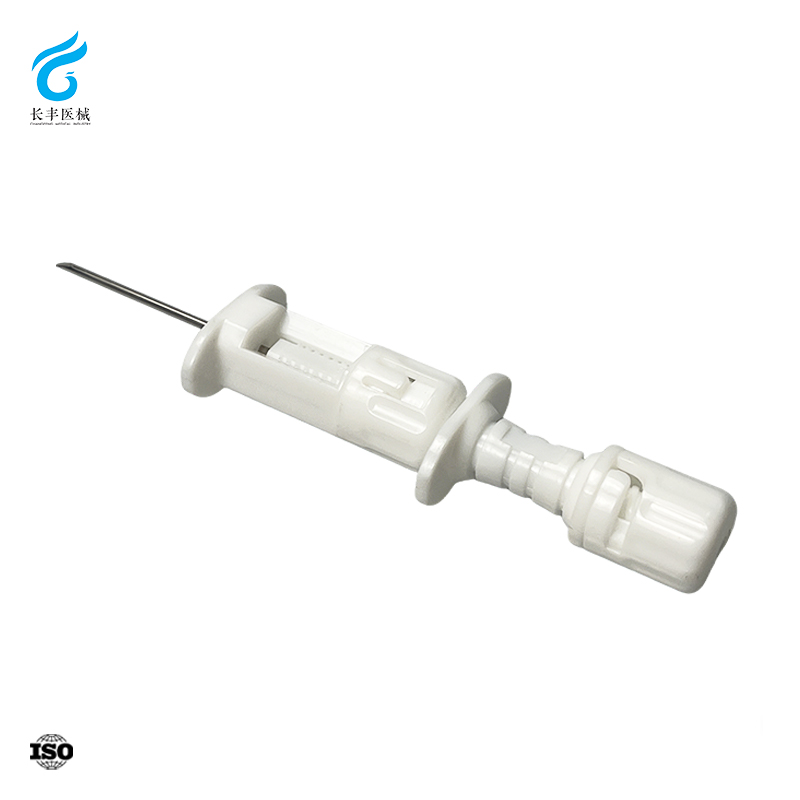
How Radiofrequency Needles Work: Core Mechanism and Engineering Innovations
Thermal Ablation Physics: Controlled Resistive Heating Through Microneedle Electrodes
Radiofrequency (RF) needles generate localized heat via resistive heating: when high-frequency alternating current flows from the microneedle electrode into tissue, the tissue’s inherent electrical impedance converts that energy into thermal energy. This controlled heating raises temperature precisely within targeted dermal or neural structures—denaturing collagen or modulating nerve activity—while sparing the epidermis through precise depth control and electrode insulation. The ideal therapeutic window lies between 55–70°C: sufficient to trigger biological response without charring or necrosis. Lesion size and geometry depend on electrode surface area, tissue conductivity, exposure duration, and power delivery fidelity. Modern systems integrate real-time impedance monitoring and automatic power modulation to maintain consistent energy deposition. By confining current flow to the insulated needle tip, these devices minimize superficial injury—enhancing safety across Fitzpatrick skin types I–VI. Critically, the clinical benefit stems not only from immediate thermal injury but also from the subsequent wound-healing cascade, which drives long-term neocollagenesis and tissue remodeling.
Design Evolution: Cooled-Tip, Multi-Electrode, and Pulsed RF Needle Configurations
Early monopolar RF needles faced limitations in depth control and epidermal safety—issues addressed through three key engineering advances. Cooled-tip configurations circulate chilled fluid within the needle shaft, protecting the epidermis while enabling higher energy delivery to deeper targets like the reticular dermis or peri-neural tissue. Multi-electrode arrays—common in microneedling platforms—deploy dozens of micro-needles per pass, expanding treatment coverage and improving procedural efficiency; their insulation profiles are purpose-built: non-insulated variants maximize volumetric dermal heating and hemostasis, whereas fully insulated tips ensure strict epidermal sparing. Pulsed radiofrequency (PRF) represents a paradigm shift: instead of continuous thermal ablation, PRF delivers brief, high-voltage bursts (e.g., 20 ms pulses at 2 Hz) that modulate neuronal excitability without raising tissue temperature above 42°C—preserving structural integrity while interrupting pain signaling. Combined with impedance feedback and adjustable pulse parameters, these innovations allow clinicians to tailor lesion shape, depth, and biological effect—supporting reproducible outcomes across aesthetic, regenerative, and neuromodulatory applications.
Clinical Applications and Therapeutic Advantages of Radiofrequency Needles
Skin Rejuvenation: Evidence for Collagen Remodeling in Wrinkle Reduction and Tightening
RF microneedling bypasses the epidermis to deliver thermal energy directly to the papillary and reticular dermis—initiating a controlled inflammatory response that stimulates fibroblast activation, hyaluronic acid synthesis, and new elastin and type I/III collagen deposition. Histologic studies confirm increased dermal thickness and cellularity within weeks, with progressive tightening and wrinkle reduction observed over 3–6 months. Both insulated and non-insulated needle configurations are clinically effective: non-insulated tips provide broader dermal heating with strong safety data across all skin types, while insulated variants offer maximal epidermal protection in high-risk patients. Meta-analyses of randomized trials report statistically significant improvements in skin laxity (p < 0.001), texture (p = 0.002), and patient-reported satisfaction (≥85% at 6-month follow-up) after 3–4 sessions spaced 4–6 weeks apart.
Pain Management: Neuromodulation Efficacy in Chronic Facet or Peripheral Nerve Conditions
Pulsed radiofrequency (PRF) is the gold-standard minimally invasive neuromodulation technique for chronic facet joint and peripheral nerve pain. Guided by fluoroscopy or ultrasound, the PRF needle is positioned adjacent to—but not within—the target nerve, delivering intermittent high-voltage pulses that alter synaptic transmission and suppress pro-inflammatory cytokines (e.g., TNF-α, IL-6) without thermal coagulation. Unlike continuous RF, which ablates nerve tissue, PRF preserves axonal continuity and motor/sensory function. In lumbar facet syndrome, randomized controlled trials show PRF provides ≥50% pain reduction for 3–6 months in 65–78% of patients, with functional gains measured by Oswestry Disability Index (ODI) scores improving by an average of 18 points at 3 months. Its favorable risk-benefit profile makes PRF especially valuable for repeat interventions and anatomically complex regions where destructive techniques carry unacceptable neurologic risk.
Safety Profile and Key Clinical Contraindications
Adverse Event Rates: Burns, Scarring, Fat Atrophy, and Neurological Complications
Despite their precision, RF needles carry thermal risks requiring disciplined technique. Superficial burns—manifesting as erythema, crusting, or blistering—are the most common adverse events, occurring in 1.2–2.8% of procedures according to a 2022 systematic registry review; they typically result from excessive power, poor electrode coupling, or inadvertent overlap during multi-pass treatments. Post-inflammatory hyperpigmentation and atrophic scarring occur in 1–3% of cases, often linked to aggressive dermal heating in darker skin tones or suboptimal post-procedure sun protection. Fat atrophy is rare (<0.5%) but may appear as subtle contour irregularities when energy penetrates beyond the dermis into subcutaneous adipose layers. Transient paresthesia occurs in <0.5% of procedures near superficial nerves (e.g., infraorbital, lateral femoral cutaneous); permanent neural injury is exceedingly rare when imaging guidance and sensory/motor testing protocols are followed. Mitigation hinges on adherence to manufacturer-recommended energy settings, real-time impedance monitoring, appropriate needle selection for anatomical depth, and rigorous pre-procedure assessment—including contraindications such as active infection, uncontrolled diabetes, pregnancy, or implanted electronic devices.
Practical Realities: Cost, Disposability, Training, and Regulatory Requirements
Single-Use Economics vs. Sterilization Barriers; FDA Class II vs. CE Marking Implications
Adoption of RF needles depends less on clinical efficacy than on operational feasibility—particularly cost structure, infection control logistics, and regulatory alignment. Single-use designs eliminate reprocessing risk and simplify workflow but increase per-procedure expense; reusable systems reduce consumable costs over time yet demand robust sterilization infrastructure—including validated autoclave cycles, staff training in cleaning verification, and documentation compliance. Training burden shifts accordingly: single-use devices require competency only in device handling and parameter selection, whereas reusable platforms necessitate ongoing education in reprocessing standards, cycle validation, and sterility assurance.
| Factor | Single-Use RF Needle | Reusable RF Needle (Sterilization) |
|---|---|---|
| Per-Procedure Cost | Higher disposable expense per treatment | Lower per-use cost after sterilization equipment investment |
| Infection Control | Inherent asepsis; no reprocessing risk | Depends on strict adherence to cleaning and autoclave protocols |
| Training Overhead | Limited to device handling | Substantial – cleaning verification, cycle documentation |
Regulatory pathways further influence procurement decisions. In the U.S., RF needles fall under FDA Class II, requiring 510(k) clearance demonstrating substantial equivalence to a predicate device—a process typically taking 6–9 months. In the EU, compliance with the Medical Device Regulation (MDR) mandates conformity assessment by a Notified Body, often extending timelines to 9–12 months. These requirements shape total cost of ownership: institutions prioritizing speed-to-clinic and audit simplicity often favor single-use systems, while larger centers with dedicated sterile processing departments may optimize long-term economics with reusable platforms—provided they sustain rigorous quality management systems aligned with ISO 13485 and applicable regulatory standards.
FAQ Section
What is the therapeutic temperature range for RF needles?
The ideal therapeutic window is between 55–70°C, allowing for effective collagen denaturation or nerve modulation without causing charring or necrosis.
What are the main advantages of cooled-tip RF needles?
Cooled-tip configurations reduce epidermal risks while facilitating higher energy delivery to deeper dermal or peri-neural targets.
How does pulsed radiofrequency differ from continuous RF?
Unlike continuous RF, which raises tissue temperature for thermal ablation, pulsed radiofrequency delivers brief, high-voltage bursts to modulate nerve activity without raising the temperature above 42°C.
What are the common adverse effects of RF needles?
Adverse events include superficial burns, post-inflammatory hyperpigmentation, atrophic scarring, fat atrophy, and transient paresthesia. Permanent neurological damage is rare with proper technique.
What are the cost considerations of single-use vs. reusable RF needles?
Single-use RF needles eliminate reprocessing risks but come with higher per-treatment costs, whereas reusable RF systems have lower long-term consumable costs but require substantial sterilization infrastructure and training.