
 EN
EN
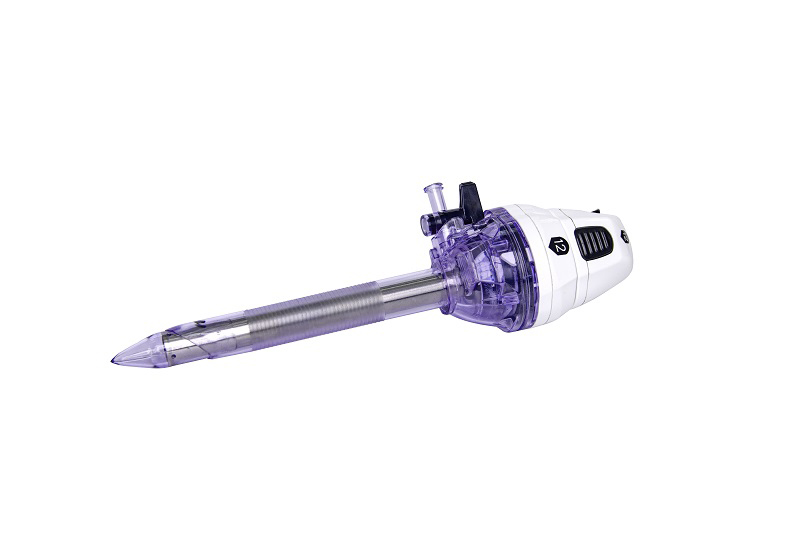
Uncompromised Patient Safety with Single-Use Sterility and Predictable Performance
Elimination of cross-contamination risk through factory-sterilized disposable laparoscopic trocar units
Disposable laparoscopic trocars arrive in sealed, ISO-certified sterile packaging—bypassing reprocessing entirely. Without manual cleaning, disinfection, or autoclaving, the risk of microbial transfer between patients is eliminated at the point of use. Each unit carries a unique lot number for full traceability, enabling rapid batch recall if needed—a safeguard impossible with reprocessed instrument sets. Validated ethylene oxide or gamma irradiation ensures complete bioburden elimination by disrupting pathogen DNA or protein structures. Critically, this removes human error and biofilm buildup—common causes of residual contamination on reusable cannulas—directly supporting surgical site infection (SSI) prevention. By standardizing a sterile, ready-to-use tool, clinical teams avoid time-consuming verification steps and documentation tied to reprocessing compliance, allowing focus on patient care.
Consistent sharp-tip geometry and insertion force control reducing visceral injury and tissue trauma
Reusable trocars degrade with repeated use: tips dull, blades misalign, and shields fatigue—altering penetration dynamics and increasing required insertion force. In contrast, factory-fresh single-use trocars deliver identical tip geometry and calibrated low insertion force case after case. Engineering analysis confirms reprocessed trocars require 35% more force to breach the abdominal wall than new disposables—a difference strongly associated with higher rates of visceral injury and vessel laceration. Controlled, predictable penetration minimizes tissue tearing, reduces fascial trauma, and lowers postoperative pain. Precise blade alignment also ensures reliable shield deployment upon peritoneal entry, preventing inadvertent organ contact. Surgeons benefit from consistent tactile feedback—no guesswork, no performance drift—translating directly into safer, more efficient laparoscopic access.
Reliable Insufflation Management via Advanced Seal Integrity
Dynamic valve and dual-seal innovations in modern disposable laparoscopic trocars
Modern disposable laparoscopic trocars integrate a dynamic pressure-sensitive valve with dual-seal architecture: a primary flapper or duckbill seal closes passively when instruments are withdrawn, while a secondary adjustable lip seal conforms tightly to shaft diameters from 5 mm to 12 mm without compromising integrity. This dual-barrier design actively compensates for pressure fluctuations during instrument exchanges, preventing retrograde CO₂ escape. Bench testing shows these systems reduce insufflation gas loss by up to 40% compared to legacy single-seal designs (Journal of Minimally Invasive Surgery, 2023). Unlike reprocessed trocars—whose seals degrade unpredictably with repeated sterilization—disposables deliver consistent, low-leakage performance from first use to last.
Reduced intraoperative gas leakage: impact on operative time, visualization, and surgeon workflow
Stable pneumoperitoneum directly enhances efficiency and safety. With minimal CO₂ leakage, the insufflator cycles less frequently, maintaining a clear, stable working space and reducing laparoscope lens fogging. Fewer repressurization events mean uninterrupted dissection and improved visual field continuity. Clinical data show every 10% reduction in CO₂ leakage correlates with a 2.3-minute decrease in total procedure time (2024). Predictable seal performance eliminates mid-case trocar replacement—preserving surgical rhythm and reducing cognitive load on the team. For departments, this supports faster case turnover, fewer workflow interruptions, and sustained focus on patient-centered outcomes.
Proven Infection Control Advantage in Minimally Invasive Surgery
Surgical site infections (SSIs) remain a leading cause of postoperative morbidity in laparoscopy—and instrument-related contamination is a well-documented contributor. Reusable trocars pose persistent risk: complex internal channels can harbor bioburden despite rigorous reprocessing, especially when biofilms form in hard-to-clean lumens. Disposable laparoscopic trocars eliminate this vector entirely through validated, factory-applied sterility. A 2023 meta-analysis found single-use laparoscopic access devices were associated with a 30% reduction in procedure-related SSIs versus reusable equivalents. Beyond the OR, preventing SSIs lowers antibiotic use, avoids reoperations, shortens hospital stays, and reduces avoidable costs—strengthening both clinical outcomes and value-based care metrics. In high-volume settings where reprocessing variability threatens consistency, single-use trocars provide a fail-safe foundation for robust, auditable infection control.
Strong Clinical and Economic Rationale for Adopting Disposable Laparoscopic Trocars
Total cost-of-ownership analysis: sterilization labor, reprocessing failures, and hidden overhead vs. transparent per-case pricing
The upfront unit cost of disposable laparoscopic trocars reflects only part of the equation. A comprehensive total-cost-of-ownership analysis reveals substantial hidden expenses in reusable systems: $3–$5 per cycle for SPD labor (cleaning, inspection, sterilization), plus capital and maintenance costs for autoclaves and validation equipment. Reprocessing failures carry steep consequences—a single device-associated SSI adds $25,000–$30,000 to case costs (AHRQ, 2023). Disposables eliminate these variables: guaranteed sterility, consistent tip sharpness, and reduced tissue trauma collectively lower operative time and complication rates. Transparent per-case pricing simplifies budgeting and removes unpredictable repair, replacement, and downtime costs. When hospitals factor in avoided reprocessing labor, reduced infection liability, and faster room turnover, the disposable model often delivers superior economic predictability and long-term value—particularly in high-volume laparoscopic programs committed to both safety and sustainability.
FAQ Section
Why are disposable laparoscopic trocars preferred over reusable ones?
Disposable trocars ensure factory-sterilized packaging, reducing the risk of cross-contamination and surgical site infections (SSI). They also maintain consistent sharp-tip geometry and predictable insertion performance, enhancing patient safety and minimizing tissue trauma.
How do disposable trocars manage insufflation better?
Modern disposable trocars incorporate dynamic valves and dual-seal systems to minimize CO₂ leakage, maintain stable pneumoperitoneum, reduce operative time, and enhance visualization during procedures.
Are disposable laparoscopic trocars cost-effective?
Though their upfront cost may seem higher, disposable trocars eliminate sterilization labor, reprocessing failures, hidden overheads, and SSI-related costs, making them economically advantageous in high-volume laparoscopic settings.
How do disposable trocars prevent surgical site infections?
Disposable trocars arrive pre-sterilized, eliminating bioburden and biofilm accumulation—common issues with reprocessed reusable trocars—thereby lowering the risk of infection.
Table of Contents
- Uncompromised Patient Safety with Single-Use Sterility and Predictable Performance
- Reliable Insufflation Management via Advanced Seal Integrity
- Proven Infection Control Advantage in Minimally Invasive Surgery
- Strong Clinical and Economic Rationale for Adopting Disposable Laparoscopic Trocars
- FAQ Section