
 EN
EN
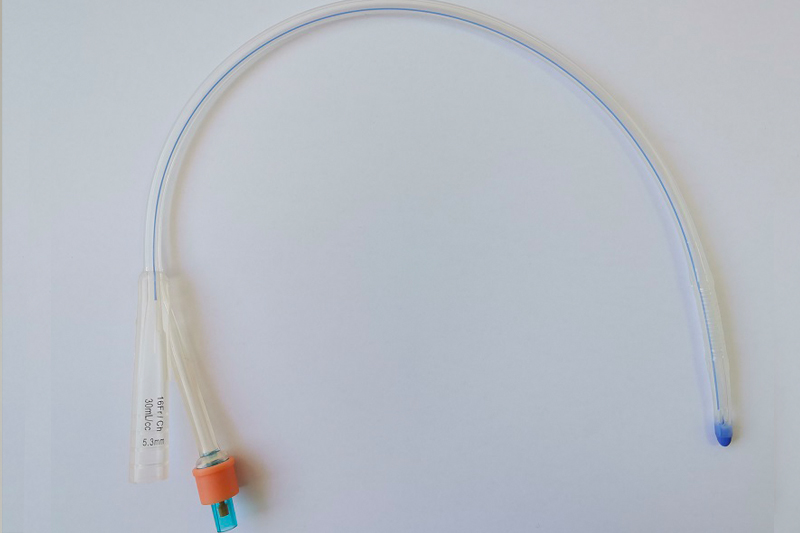
Latex Catheter Risks: Allergy, Encrustation, and Infection Vulnerability
Latex allergy prevalence and implications for catheter selection
Natural rubber latex catheters pose a well-documented immunological risk. A systematic review reports a 4.32% prevalence of latex allergy among healthcare workers—a proxy for exposure-related sensitization—and higher rates (up to 72%) in high-risk groups such as patients with spina bifida or multiple surgeries. Clinical reactions range from irritant contact dermatitis to life-threatening anaphylaxis, particularly when latex proteins contact mucosal surfaces during indwelling use. Because allergy history is often incomplete or undocumented, proactive avoidance is essential: latex-free alternatives—particularly medical-grade silicone—should be the default for all catheterizations unless contraindicated, especially in perioperative or emergency settings where rapid, reliable safety is non-negotiable.
Material degradation and encrustation dynamics during indwelling use
Latex catheters are inherently vulnerable to surface degradation and encrustation due to their irregular, porous microstructure. This topography promotes bacterial adhesion and biofilm formation—occurring in nearly half of long-term catheter users—and creates a favorable environment for urease-producing pathogens like Proteus mirabilis. These organisms alkalinize urine, precipitating magnesium ammonium phosphate (struvite) crystals that adhere to the catheter surface. The resulting encrustation can obstruct flow, trigger bladder spasms, and cause urinary retention—complications directly linked to the material’s susceptibility. This cascade contributes significantly to the 3–7% daily risk of catheter-associated urinary tract infection (CAUTI), reinforcing that material choice is not incidental but pathophysiologically consequential.
Silicone Catheter Advantages: Biocompatibility, Biofilm Resistance, and Long-Term Integrity
Reduced urothelial inflammation and tissue reactivity with silicone
Medical-grade silicone offers superior biocompatibility, validated by USP Class VI and ISO 10993 certification for mucosal contact. Its hydrophobic, smooth, and chemically inert surface resists protein adsorption and minimizes foreign-body response—unlike latex, which elicits measurable urothelial inflammation. Silicone maintains structural integrity in urine over time, showing no leaching of extractables or surface erosion, even after repeated sterilization. Its flexibility reduces insertion trauma and preserves mucosal integrity during prolonged indwelling, making it the evidence-supported material of choice for extended-use applications.
Lower CAUTI incidence linked to diminished bacterial adhesion on silicone surfaces
Silicone’s resistance to bacterial colonization is a key driver of its lower CAUTI incidence. Its smooth, non-porous surface impedes both initial planktonic attachment and subsequent biofilm maturation—disrupting the critical first step in infection pathogenesis. Unlike latex, silicone does not degrade in the presence of urinary salts or enzymes, preserving its anti-adhesive properties throughout the dwell period. Clinical data consistently associate silicone catheters with reduced biofilm burden, encrustation, and symptomatic UTIs in long-term users—supporting its role as a foundational element of CAUTI prevention strategies.
Clinical Decision Framework: Matching Catheter Material to Patient Needs and Duration
Selecting the optimal urinary catheter material requires integrating patient-specific risk factors, anticipated dwell time, and material performance evidence. For short-term (<30 days) use in low-risk patients with confirmed negative latex history, latex catheters may be clinically appropriate—but only after structured screening. In contrast, silicone is the standard-of-care for long-term (>30 days) indwelling use, neurogenic bladder, recurrent CAUTI, or any scenario involving mucosal contact beyond 30 days—aligning with FDA-recognized biocompatibility standards for Class II devices. A robust decision framework must weigh allergy status, infection history, anatomical considerations, and material stability—not as isolated variables, but as interdependent components of individualized risk mitigation.
Practical Guidance for Healthcare Providers: Screening, Transition Protocols, and Latex Catheter Alternatives
Systematic latex allergy screening before catheterization
A concise, standardized screening protocol is essential to identify at-risk patients before device selection. Clinicians should ask about prior reactions to balloons, gloves, dental dams, or condoms—even mild symptoms like localized itching warrant caution. High-risk populations—including those with spina bifida, congenital urological anomalies, or ≥3 surgical procedures—require automatic latex avoidance. The table below outlines actionable risk stratification:
| Risk Stratification | Key Screening Questions | Action |
|---|---|---|
| High Risk | History of anaphylaxis to latex; multiple surgical procedures; spina bifida | Avoid all latex products; use silicone or other non-latex alternatives |
| Moderate Risk | Contact dermatitis from gloves or balloons; food allergies to avocado, kiwi, or banana | Strongly consider a silicone catheter; confirm allergy via serology if time permits |
| Low Risk | No known allergies or risk factors | Use a latex catheter only if clinically indicated—and monitor closely for first-time reactions |
Stepwise transition from latex to silicone in high-risk or long-term users
A successful transition hinges on coordination across nursing, urology, and materials management teams. Begin by auditing current catheter utilization and identifying patients with documented latex sensitivity or anticipated long-term drainage needs. Prioritize replacement in high-acuity areas (e.g., ICU, spinal cord injury units) where error consequences are greatest. Provide targeted staff education on silicone catheter handling—including subtle differences in balloon inflation volume and insertion technique—to ensure consistent, safe implementation. Embed the change within broader CAUTI prevention initiatives to reinforce clinical rationale and sustain adoption.
FAQs
What are the primary risks associated with latex catheters?
Latex catheters pose risks such as latex allergies, material degradation, bacterial adhesion, and encrustation, all of which increase vulnerability to catheter-associated complications.
Why is silicone preferred for long-term catheter use?
Silicone is preferred for long-term use due to its biocompatibility, smooth surface minimizing bacterial adhesion, and resistance to material degradation and infection-related complications.
How can healthcare providers screen for latex allergies before catheterization?
Healthcare providers can use standardized screening protocols, including questions about prior allergic reactions to latex-based products and assessing risk factors in high-risk populations.
What actions should be taken for high-risk patients prone to latex allergies?
High-risk patients should avoid all latex products and be transitioned to silicone or other non-latex alternatives to minimize adverse reactions.
How can staff ensure a smooth transition from latex to silicone catheters?
Staff should undergo training in catheter handling, auditing utilization, and aligning the transition process with broader CAUTI prevention strategies for successful implementation.
Table of Contents
- Latex Catheter Risks: Allergy, Encrustation, and Infection Vulnerability
- Silicone Catheter Advantages: Biocompatibility, Biofilm Resistance, and Long-Term Integrity
- Clinical Decision Framework: Matching Catheter Material to Patient Needs and Duration
- Practical Guidance for Healthcare Providers: Screening, Transition Protocols, and Latex Catheter Alternatives
-
FAQs
- What are the primary risks associated with latex catheters?
- Why is silicone preferred for long-term catheter use?
- How can healthcare providers screen for latex allergies before catheterization?
- What actions should be taken for high-risk patients prone to latex allergies?
- How can staff ensure a smooth transition from latex to silicone catheters?