
 EN
EN
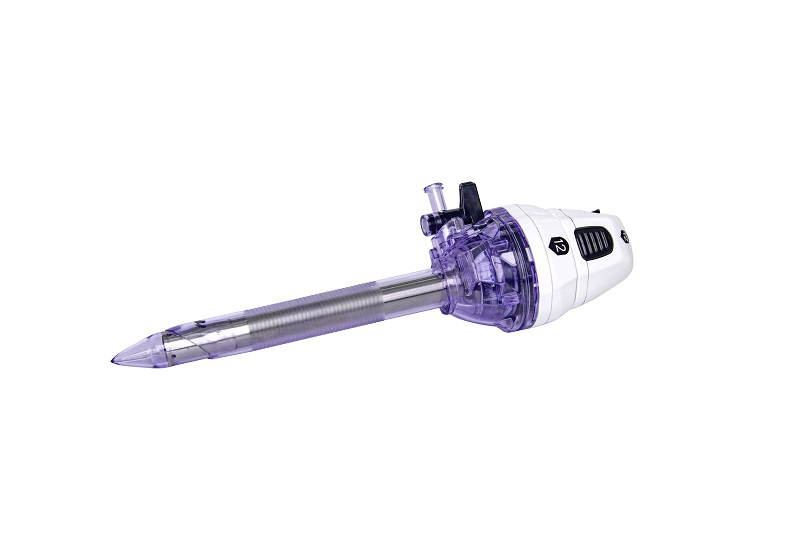
Why Surgical Disposable Laparoscopic Trocars Enhance Patient Safety
Eliminating Cross-Contamination Through Single-Use Sterility
Single-use trocars eliminate the risk of pathogen transmission inherent in reusable instruments. Each surgical disposable laparoscopic trocar arrives pre-sterilized and sealed, ensuring zero residual bio-burden from prior procedures. Reprocessing failures—including incomplete cleaning or sterilization lapses—are well-documented in high-volume surgical environments. A 2022 infection control study found that up to 3% of reprocessed instruments retained detectable organic matter; for invasive entry devices, even trace contamination can trigger surgical site infections or peritoneal seeding. By removing reprocessing from the equation, disposable trocars deliver guaranteed sterility for every case—especially critical during multi-port laparoscopy where repeated abdominal entries increase exposure risk.
Consistent Sharp-Tip Performance Reduces Insertion Trauma and Visceral Injury
Trocars with factory-fresh, precision-ground tips ensure predictable insertion force and minimal tissue disruption. Reusable trocars inevitably degrade with repeated sharpening and autoclaving, leading to dullness that demands greater downward pressure—and raises the risk of uncontrolled entry and visceral injury. Clinical data show single-use trocars reduce required insertion force by up to 40% compared to reprocessed counterparts, translating to less fascial shearing, fewer vessel injuries, and significantly lower rates of bowel perforation. This consistency is especially vital in obese patients, where thicker abdominal walls demand optimal cutting performance. Standardizing on sharp, single-use tips removes a key variable known to compromise procedural safety.
Key Design Innovations in Modern Surgical Disposable Laparoscopic Trocars
Tissue-Sparing Sharp Tip and Pre-Assembled Cannula-Seal Integration
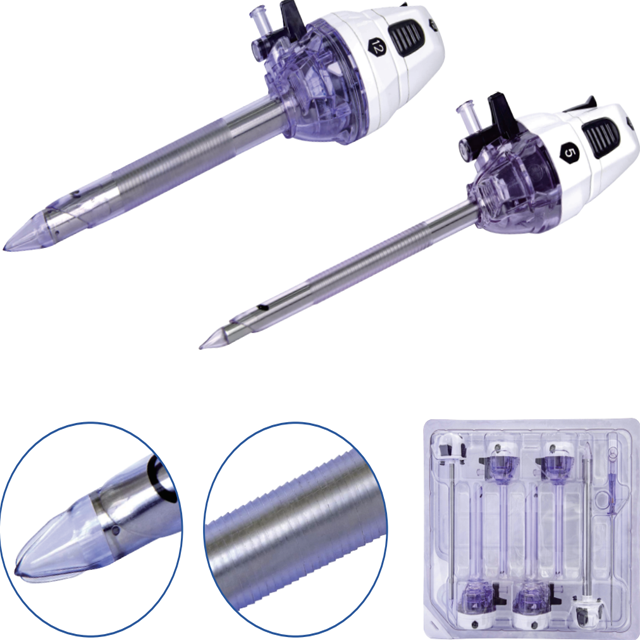
Modern surgical disposable laparoscopic trocars feature a tissue-sparing sharp tip engineered to minimize trauma during initial abdominal entry—reducing insertion force by approximately 30% versus legacy reusable models. This design lowers the incidence of unintended punctures to adjacent organs, particularly in anatomically challenging cases. Complementing this is the pre-assembled cannula-seal integration: a fully assembled, tested unit that eliminates manual assembly errors in the sterile field. Surgeons gain immediate readiness, reducing setup time and mitigating contamination risks associated with last-minute component handling.
Dynamic Seal Systems: Evidence on Insufflation Leak Reduction
Advanced dynamic seal systems automatically adapt to varying instrument diameters while maintaining stable pneumoperitoneum pressure. Peer-reviewed clinical studies demonstrate these seals reduce insufflation gas leakage by 78% compared to conventional static seals—directly supporting uninterrupted visualization during complex dissection. The elimination of manual seal adjustments prevents operative pauses, and proprietary seal materials resist tearing during frequent instrument exchanges. These features collectively contribute to shorter procedure durations and improved surgical precision without compromising intra-abdominal pressure stability.
Proven Clinical Utility Across Core Laparoscopic Procedures
Surgical disposable laparoscopic trocars deliver reliable performance across high-frequency minimally invasive procedures—including cholecystectomy, appendectomy, and inguinal or ventral hernia repair. In multi-port cases, each trocar provides a sterile, sharp entry surface—critical when accessing the peritoneal cavity through multiple sites. The pre-assembled cannula-seal system streamlines port preparation, allowing surgeons to maintain focus on dissection rather than device setup. Robust seal integrity sustains pneumoperitoneum throughout the operation, minimizing repeated insufflation interventions. Combined with consistent tip sharpness, this reliability reduces variability-linked complications such as inadvertent bowel or vascular injury—supporting both routine and advanced laparoscopic workflows with measurable gains in safety and efficiency.
Operational and Economic Advantages in High-Volume Surgical Settings
For high-volume surgical centers, surgical disposable laparoscopic trocars drive tangible operational and economic benefits. Eliminating reprocessing removes labor-intensive steps—including cleaning verification, sterilization cycles, inspection, and restocking—freeing OR staff and accelerating room turnover. Predictable device performance also reduces intraoperative complications that extend case times or necessitate unplanned interventions, lowering downstream costs tied to prolonged hospital stays. Inventory management simplifies significantly: no need to track worn components, replace damaged seals, or manage reprocessing logistics. When factoring in avoided reprocessing expenses, reduced complication-related costs, and increased procedural throughput, disposable trocars demonstrate a favorable total cost-per-case profile—making them not only safer but also strategically sound for high-throughput laparoscopic programs.
FAQ
What are the benefits of surgical disposable laparoscopic trocars over reusable ones?
They eliminate cross-contamination risks, provide consistent sharp-tip performance, reduce insertion trauma, and offer economic advantages in high-volume settings.
How do disposable trocars ensure sterility?
Disposable trocars arrive pre-sterilized and sealed, removing the risks associated with reprocessing malfunctions, ensuring zero residual contamination.
What makes single-use trocars safer for patients?
Factory-fresh sharp tips minimize tissue disruption and insertion force, reducing complications like bowel perforation or vessel injury.
How do modern design innovations improve trocar functionality?
Features include tissue-sparing sharp tips, pre-assembled cannula-seal integration to avoid manual errors, and dynamic seal systems to reduce insufflation gas leaks effectively.
Why are disposable trocars considered cost-effective?
They eliminate the need for labor-intensive reprocessing, reduce complication rates, and improve operating room efficiency, resulting in lower overall costs.