
 EN
EN
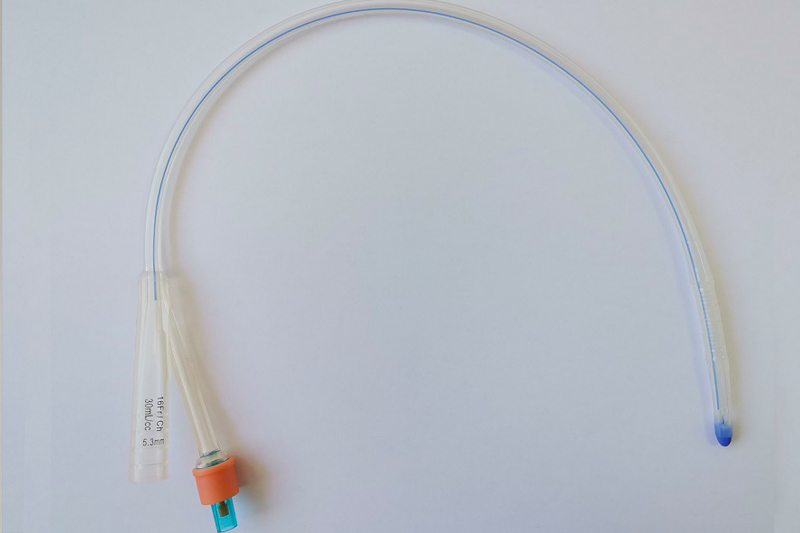
Why the Foley Latex Catheter Remains Clinically Relevant
The Foley latex catheter remains a foundational tool in urologic management worldwide—not because it is universally superior, but because its specific advantages align precisely with well-defined clinical needs. Its enduring relevance rests on three pillars: proven cost-effectiveness, favorable biomechanical properties for short-term use, and decades of validated clinical experience. Natural latex offers exceptional flexibility and elasticity, enabling smoother urethral passage and better conformity to anatomical contours during insertion—reducing mechanical trauma when technique is optimal. This makes it especially suitable for acute interventions where speed, familiarity, and ease of use matter most.
However, its use demands vigilant risk mitigation. Latex allergy—ranging from contact dermatitis to life-threatening anaphylaxis—remains a non-negotiable contraindication, particularly in high-risk populations such as patients with spina bifida or prior occupational latex exposure. Additionally, latex surfaces support greater bacterial adherence and biofilm formation compared to silicone, contributing to higher CAUTI rates; data from Infection Control & Hospital Epidemiology (2023) estimate that approximately 20% of hospitalized patients with indwelling catheters develop CAUTI, with material choice being one modifiable contributor.
Thus, the Foley latex catheter’s role is intentionally circumscribed: it is not a default, but a deliberate choice—indicated when allergy is ruled out, catheterization is expected to last ≤14 days, and clinical priorities include rapid deployment, cost containment, and procedural simplicity. Within this narrow yet common clinical window—acute retention, postoperative monitoring, or palliative symptom control—it delivers reliable, predictable performance grounded in real-world utility and extensive clinician familiarity.
Key Clinical Applications of the Foley Latex Catheter
Acute Urinary Retention and Short-Term Bladder Drainage
The Foley latex catheter is widely regarded as the first-line intervention for acute urinary retention. Its immediate bladder decompression relieves pain, prevents detrusor overdistension, and mitigates risks of upper urinary tract injury from elevated intravesical pressure. For short-term drainage—typically defined as under two weeks—the latex variant offers a pragmatic balance of affordability, ease of insertion, and functional reliability. It is also routinely employed for precise hourly urine output measurement in critical care, where accurate fluid balance assessment directly informs resuscitation and diuretic strategies.
Crucially, duration dictates safety: evidence consistently shows infection risk rises significantly after 48–72 hours of indwelling placement. Therefore, clinicians must implement a structured “catheter removal protocol,” reassessing necessity at least daily and removing the device as soon as the underlying indication resolves—often within 24–72 hours.
Postoperative and Palliative Care Scenarios
In surgical recovery, the Foley latex catheter supports healing by maintaining a dry operative field and protecting delicate urogenital anastomoses—especially following prostatectomy, cystoscopy, or pelvic reconstructive procedures. Its flexibility minimizes pressure-related mucosal irritation during early mobilization, while its low-profile balloon inflation supports secure, low-tension drainage.
In palliative and end-of-life care, the focus shifts from curative intent to comfort and dignity. Here, the Foley latex catheter serves a clear quality-of-life purpose: preventing urinary incontinence, skin breakdown, and distress associated with bladder distension—without requiring repeated intermittent catheterization. Similarly, in patients with unstable spinal or pelvic fractures requiring strict immobilization, it provides essential, non-invasive bladder management until definitive orthopedic stabilization occurs.
Across all these settings, shared decision-making and ongoing reassessment remain central. The catheter should never be maintained solely out of habit; each day of continued use must be justified by current clinical need—and weighed against the cumulative risk of infection, encrustation, or trauma.
Critical Trade-Offs: Latex vs. Silicone Foley Catheters
When selecting an indwelling catheter, material choice is not merely logistical—it directly influences safety, comfort, and outcomes. Latex and silicone Foley catheters represent complementary tools, each optimized for distinct clinical contexts rather than competing for universal dominance.
Allergy Risk, Infection Rates, and Material Durability Compared
Latex carries a well-established risk of IgE-mediated allergic reaction, making it absolutely contraindicated in patients with known latex hypersensitivity, spina bifida, or a history of multiple surgeries or atopy. In contrast, medical-grade silicone is inert and latex-free—making it the standard of care for high-risk allergy populations.
Infection dynamics differ meaningfully. Latex’s porous microstructure facilitates bacterial colonization and early biofilm development, correlating with higher CAUTI incidence in prolonged use. Silicone’s smooth, hydrophobic surface resists microbial adhesion more effectively—though no material eliminates infection risk entirely. Rigorous aseptic insertion and maintenance remain paramount regardless of material.
Durability profiles diverge too: latex excels in flexibility and kink resistance, offering superior patient tolerance during short-to-medium term use (up to ~2 weeks). Silicone surpasses latex in chemical stability and resistance to encrustation—critical for longer dwell times—but its inherent rigidity may increase urethral discomfort or mucosal trauma if improperly sized or secured.
Balloon volume further refines utility: the standard 10 mL balloon suffices for routine drainage, while larger 30 mL balloons are reserved for specific indications like post-prostatectomy hemostasis—not general use. Ultimately, selection hinges on three clinical anchors: confirmed absence of latex allergy, anticipated duration of catheterization, and the relative weight of infection prevention versus procedural efficiency and comfort.
Practical Guidance for Safe and Effective Foley Latex Catheter Use
Patient Screening, Insertion Best Practices, and Monitoring Protocols
Safe use begins before insertion: screen every patient for latex allergy using a structured history—including prior reactions to gloves, balloons, or medical devices—and confirm appropriateness for short-term use only. Never assume safety based on absence of known allergy alone; consider risk stratification for high-prevalence groups.
During insertion, adhere strictly to evidence-based technique: advance the catheter fully to the hub before inflating the balloon—a step omission accounts for a substantial proportion of iatrogenic urethral injuries. Always verify free urine return prior to inflation; if none appears, gently irrigate with sterile saline before proceeding. Never inflate the balloon in the urethra.
Securement is preventive medicine: use adhesive anchor devices or clothing clips to eliminate traction on the catheter shaft, thereby reducing bladder spasms, migration, and urethral erosion. Position the drainage bag below the level of the bladder at all times, and empty it when it reaches 50–66% capacity to prevent backflow and pressure-related complications.
Ongoing monitoring requires discipline: assess daily whether the catheter remains clinically necessary (using standardized criteria such as the CDC’s CAUTI prevention checklist), inspect for kinks or sediment buildup, and maintain strict hand hygiene and closed-system integrity during handling. Facility-level tracking of catheter-related complications—including the finding from a multicenter audit that nearly 57% of insertions were associated with at least one adverse event—supports targeted education and process improvement. Annual competency validation covering selection rationale, proper hubbing, securement, and documentation ensures sustained adherence to best practices and reinforces a culture of safety.

FAQ
What are the primary benefits of Foley latex catheters?
Foley latex catheters are prized for their cost-effectiveness, flexibility, and suitability for short-term use. They enable smoother insertion and better conformity to anatomical contours, reducing mechanical trauma during deployment when technique is optimal.
What are the risks associated with Foley latex catheters?
Risks include latex allergies, which can range from mild dermatitis to severe anaphylaxis, and higher infection rates due to latex's porous surface promoting bacterial colonization and biofilm formation.
When should Foley latex catheters be used?
They are ideal for short-term urinary drainage (≤14 days), acute urinary retention, postoperative monitoring, and palliative care scenarios, provided the patient isn’t allergic to latex.
How do latex Foley catheters compare to silicone ones?
Latex catheters are more flexible and kink-resistant, making them comfortable for short-term use, but they have higher risks of allergies and infections. Silicone catheters are inert, resistant to encrustation, and ideal for long-term use but may cause discomfort due to their rigidity.
What are essential practices when using a Foley latex catheter?
Important practices include screening patients for latex allergies, adhering to evidence-based insertion techniques, securing the catheter effectively, maintaining hygiene, and monitoring usage daily to prevent prolonged risk exposure.