
 EN
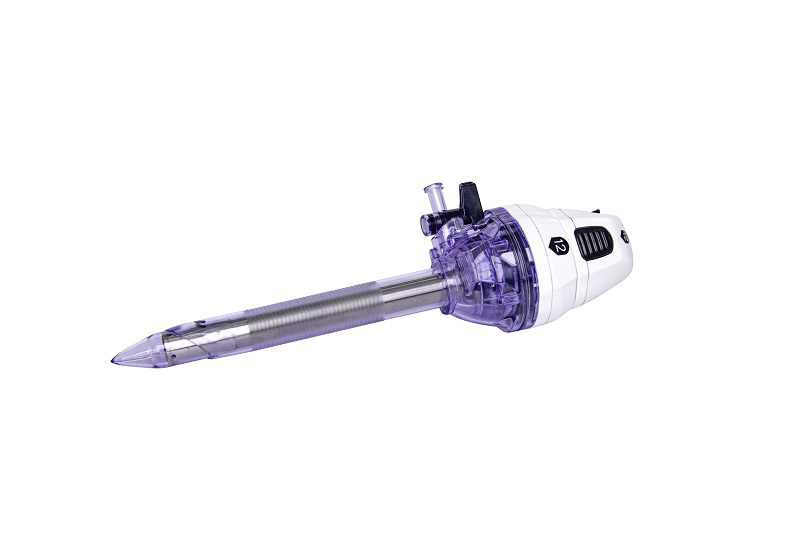
Matching Trocar Diameter and Length to Patient Anatomy and Procedure Type
Optimizing Caliber (5–12 mm) for Access, Instrumentation, and Tissue Trauma
Selecting the caliber of a disposable laparoscopic trocar balances instrument functionality with abdominal wall integrity. Common sizes—5 mm, 10 mm, and 12 mm—each carry distinct mechanical and biological trade-offs:
| Caliber | Typical Use | Representative Instruments | Tissue Impact |
|---|---|---|---|
| 5 mm | Diagnostic laparoscopy, fine dissection, fluid aspiration | Graspers, scissors, energy devices | Minimal fascial defect; lowest risk of incisional hernia and postoperative pain |
| 10 mm | Camera port, clip appliers, specimen retrieval bags | 10‑mm laparoscope, medium clip appliers | Moderate fascial stretch; fascial closure often required to prevent herniation |
| 12 mm | Linear staplers, large specimen extraction | Endoscopic linear cutter, 12‑mm stapling devices | Largest fascial gap; highest hernia potential; placement must avoid vascular or visceral structures |
Larger ports enable advanced instrumentation but increase hernia risk. Surgeons therefore prioritize the smallest caliber compatible with all planned instruments—reserving 10–12 mm ports only when clinically necessary.
Accounting for BMI, Abdominal Wall Thickness, and Port Site Geometry
Patient anatomy directly dictates optimal trocar length. Standard-length trocars (100–110 mm) frequently fail to reach the peritoneal cavity in patients with BMI ≥ 30 kg/m² due to thick subcutaneous and muscular layers. In these cases, extended-length models (≥ 150 mm) are essential for safe, controlled entry. Port site geometry further refines safety:
- In obese patients, inserting trocars more perpendicularly—and placing them laterally to the rectus sheath—reduces effective abdominal wall thickness.
- A slightly enlarged skin incision (e.g., 12 mm for a 10 mm trocar) minimizes friction, tissue tearing, and seal disruption.
- For thin patients, shorter trocars or shallower insertion angles help prevent inadvertent deep organ injury.
Accurate length matching ensures complete peritoneal access, prevents CO₂ leakage, and sustains stable pneumoperitoneum—especially critical with fixed-length disposable trocars.
Evaluating Tip Design Safety Features of Disposable Laparoscopic Trocars
The safety profile of a disposable laparoscopic trocar begins at the tip. Modern designs—bladeless dilating, optical, and shielded mechanisms—each contribute to lower visceral injury rates through distinct biomechanical advantages.
Bladeless, Optical, and Shielded Mechanisms: Evidence on Visceral Injury Prevention
Bladeless dilating tips separate tissue planes without cutting, reducing major vascular injury to as low as 0.03%—a marked improvement over sharp, blind-cutting blades. Optical trocars incorporate a transparent tip that enables real-time visualization of fascial layers during insertion; meta-analytic data show this reduces bowel injury to just 0.1%. Shielded blades use spring-loaded guards that automatically retract upon peritoneal entry, adding passive protection against uncontrolled advancement.
Because disposable trocars are single-use, they retain factory-sharp precision and seal integrity—unlike reprocessed systems, where tip dulling increases insertion force by up to 40%. This consistency supports controlled, predictable entry and reinforces a layered safety strategy across all three design types.
Ensuring Seal Integrity and Pneumoperitoneum Stability with Disposable Laparoscopic Trocars
Valve Technology, CO₂ Leak Thresholds, and Compatibility with High-Flow Insufflation
Stable pneumoperitoneum hinges on robust, adaptive valve systems. High-performance disposable trocars integrate multi-layer leaflet or cross-slit seals—often pairing a primary dynamic seal with a secondary passive seal—that conform tightly around instruments from 5 mm to 12 mm. Bench testing confirms optimized designs limit CO₂ leakage to <0.5 L/min at 15 mmHg—a clinically validated threshold that preserves visualization and curbs gas consumption.
Advanced elastomeric membranes resist tearing across repeated instrument exchanges, while sealed reducer caps accommodate smaller tools without added drag or pressure fluctuation. Under high-flow insufflation (≥40 L/min), these valves maintain intra-abdominal pressure with ≤2 mmHg deflection—preventing the “piston effect” that compromises surgical precision. A 2024 comparative evaluation found such dynamic sealing systems reduced CO₂ leakage by up to 78% versus static ring gaskets, directly supporting uninterrupted operative conditions.
Weighing Total Value: Cost, Safety, and Workflow Impact of Disposable vs. Reusable Options
Choosing a disposable laparoscopic trocar requires evaluating total value—not just acquisition cost. While reusable systems offer lower per-procedure hardware expense over time, their true operational burden is often underestimated. Reprocessing demands significant labor: cleaning, sterilization validation, and inspection add 30–50% to overhead costs compared to ready-to-use disposables. More critically, performance degrades with reuse—microscopic tip dulling and seal fatigue increase insertion force and elevate visceral injury risk.
From a clinical economics perspective, even modest complication increases shift the balance decisively. A single surgical site infection (SSI) incurs an average $25,000 in additional care (CDC, 2022)—costs that far exceed the price differential of dozens of disposable trocars. Operationally, disposables eliminate instrument turnaround delays, support rapid room turnover in high-volume settings, and guarantee consistent sterility and sharpness. When staff time, complication risk, and procedural reliability are factored in, disposable trocars frequently deliver lower total cost of ownership per case.
A Practical Clinical Framework for Disposable Laparoscopic Trocar Selection
Step-by-Step Decision Tree: Integrating Evidence, Surgeon Preference, and Institutional Protocols
Selecting the right disposable laparoscopic trocar follows a structured, evidence-informed pathway:
- Match to procedure and patient anatomy: Choose caliber based on the largest planned instrument (e.g., 5 mm for diagnostics, 12 mm for staplers). Then adjust length using BMI and anatomical landmarks—ultrasound-guided abdominal wall thickness measurement offers objective guidance in borderline or high-BMI cases.
- Prioritize safety-critical features: Opt for bladeless optical tips in procedures with high visceral proximity (e.g., retroperitoneal dissection); shielded entry remains appropriate for standard-risk cases.
- Align with institutional systems: Integrate selection with standardized instrument trays, insufflator flow profiles, and staff competency records—ensuring training, supply chain, and workflow reinforce rather than undermine safety goals.
A 2023 systematic review demonstrated that protocols incorporating diameter, tip design, and patient-specific anatomy reduce port-site complications by 28% (Mudgal et al., 2023). This three-tiered framework harmonizes clinical evidence, procedural ergonomics, and system-level efficiency—supporting safer, more reliable laparoscopic access.
Frequently Asked Questions
What are the common sizes of disposable laparoscopic trocars?
The most common sizes are 5 mm, 10 mm, and 12 mm, each optimized for specific instrumentation and procedures.
How can BMI impact trocar length selection?
A higher BMI increases abdominal wall thickness, necessitating extended-length trocars (≥150 mm) for safe and controlled entry.
What are the advantages of optical trocar tips?
Optical trocar tips enable real-time visualization during insertion, reducing the risk of visceral injuries such as bowel perforation.
Why might disposable trocars be preferable over reusable options?
Disposable trocars offer consistent sharpness, sterility, and eliminate reprocessing labor costs, which can lead to lower total ownership costs per case.
How do advanced valve systems support pneumoperitoneum stability?
High-performance disposable trocars use multi-layer seals to reduce CO₂ leakage and maintain stable intra-abdominal pressure during procedures.
Table of Contents
- Matching Trocar Diameter and Length to Patient Anatomy and Procedure Type
- Evaluating Tip Design Safety Features of Disposable Laparoscopic Trocars
- Ensuring Seal Integrity and Pneumoperitoneum Stability with Disposable Laparoscopic Trocars
- Weighing Total Value: Cost, Safety, and Workflow Impact of Disposable vs. Reusable Options
- A Practical Clinical Framework for Disposable Laparoscopic Trocar Selection
- Frequently Asked Questions