
 EN
EN
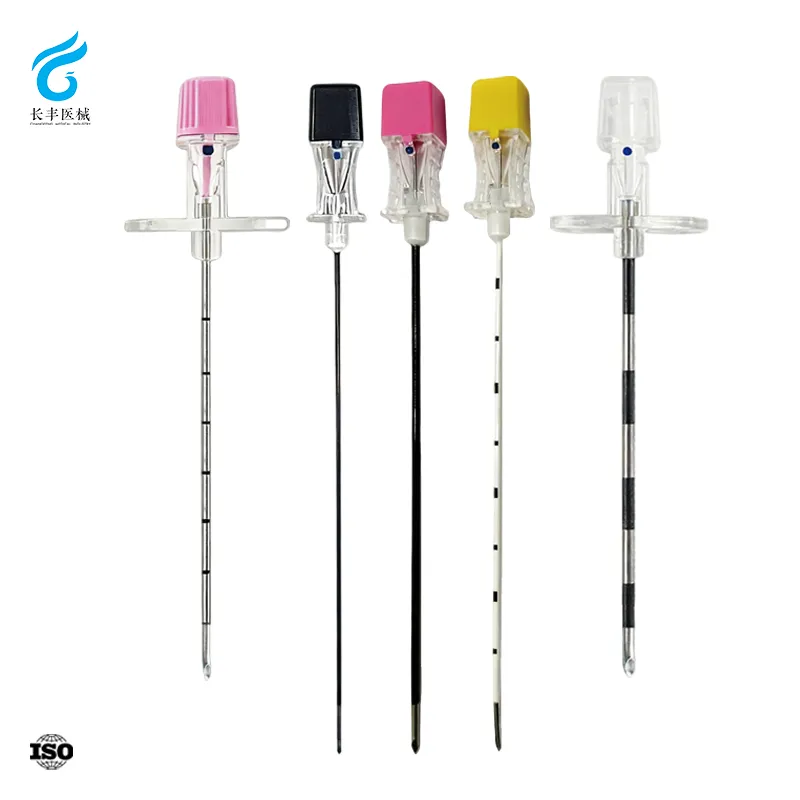
Anatomy of Anesthesia Needle Design: Gauge, Tip Geometry, and Hub Function
Beveled (Quincke) vs. Atraumatic (Whitacre, Sprotte): How Tip Design Affects Dural Integrity and PDPH Risk
Beveled (Quincke) needles feature sharp cutting tips that incise dural fibers, whereas atraumatic pencil-point designs—such as Whitacre and Sprotte—bluntly separate them. This fundamental difference directly impacts dural integrity: Quincke needles create flaps that often fail to reseal, increasing cerebrospinal fluid (CSF) leakage and elevating post-dural puncture headache (PDPH) risk by 1.5–2× compared to pencil-point alternatives. A landmark meta-analysis found PDPH incidence dropped from 9.6% with Quincke to 4.1% with Whitacre needles in spinal anesthesia—evidence cited by the American Society of Regional Anesthesia and Pain Medicine (ASRA) as foundational for current best-practice guidelines. Pencil-point tips also provide more consistent tactile feedback during dural penetration, supporting confident identification of the “pop” without compromising seal integrity. The clinical takeaway is unambiguous: smooth, non-cutting tip geometry reduces tissue trauma and improves patient safety.
Gauge Selection Demystified: Balancing Flow Rate, Tissue Resistance, and Patient Safety Across Procedures
Gauge selection must reconcile fluid dynamics—governed by Poiseuille’s law—with tissue biomechanics and procedural goals. Higher gauge numbers indicate narrower lumens: 25G–29G needles minimize passive cellular trauma and CSF leakage but restrict flow, particularly for viscous solutions like hyperbaric bupivacaine. Conversely, wider gauges (e.g., 22G) improve flow and aspiration reliability but increase PDPH incidence. Evidence-based recommendations reflect this trade-off:
| Procedure | Recommended Gauge | Key Safety Rationale |
|---|---|---|
| Spinal anesthesia | 25G–29G | Reduces PDPH to ≤3% while maintaining reliable CSF flashback |
| Epidural catheterization | 17G–18G | Ensures catheter visibility and maneuverability; avoids kinking or shearing |
| Peripheral nerve block | 21G–22G | Optimizes balance between tissue displacement, flow volume, and needle stability |
Suboptimal gauge choice carries measurable consequences: clinicians report a 32% higher rate of failed CSF aspiration with needles narrower than 22G in routine spinal cases. CDC-supported flow modeling across 500 physician-years confirms viscosity-adjusted gauge selection significantly lowers procedural failure and local trauma. Institutional programs integrating standardized gauge education have reduced insertion-related tissue injury by up to 50% over three years—underscoring that precision in needle sizing is not logistical convenience, but a core safety intervention.
Spinal Anesthesia Needles: Evidence-Based Selection for Optimal CSF Access and Safety
Comparative Outcomes: Quincke, Whitacre, and Sprotte Needles in CSF Aspiration Success and Post-Dural Puncture Headache Incidence
The needle’s tip geometry—not just its gauge—determines both procedural success and complication risk in spinal anesthesia. Quincke needles produce clean, sharp dural incisions associated with PDPH rates of 10–15% in patients under 40, per ASRA consensus data. In contrast, Whitacre and Sprotte needles—both classified as atraumatic—displace rather than cut dural fibers, reducing PDPH to <5% across diverse populations. Critically, studies show no clinically meaningful difference in CSF aspiration success among Quincke, Whitacre, and Sprotte needles at matched gauges (22–27G); all achieve clear CSF return in >95% of attempts when used correctly. However, the Sprotte’s larger lateral orifice offers marginally faster aspiration—a practical advantage in high-BMI or anatomically challenging cases. While initial CSF flashback may be fractionally delayed with pencil-point designs due to smaller orifice surface area, this does not translate to increased procedural time or failure. The preponderance of evidence supports atraumatic needle use as the standard of care for elective spinal anesthesia: it delivers equivalent efficacy while substantially lowering a preventable, distressing complication.
Epidural and Regional Anesthesia Needles: Tuohy, Paramedian, and Nerve Block–Specific Designs
Epidural and regional anesthesia rely on purpose-built needles engineered for distinct anatomical targets and technical objectives. The Tuohy needle—characterized by its curved, non-cutting Huber tip—facilitates safe, controlled catheter advancement into the epidural space. Paramedian approaches use modified needle trajectories to bypass midline ligamentous resistance, especially valuable in patients with degenerative spine changes. Nerve block needles prioritize short shaft length and variable bevel angles (e.g., short-bevel for superficial blocks, long-bevel for deep plexus targeting) to enhance perineural accuracy and reduce intraneural injection risk. Across all designs, optimal performance hinges on calibrated flexibility, predictable sharpness, and reproducible tactile feedback—features validated through ASTM F2101 testing standards for needle stiffness and tip deflection.
Tuohy Needle Curvature and Loss-of-Resistance Technique: Biomechanics of Epidural Space Localization
The Tuohy needle’s 10–15° distal curvature serves two biomechanically critical functions: first, it deflects the epidural catheter away from the dura upon exit, reducing inadvertent dural puncture by ~30% compared to straight-tip alternatives; second, it directs catheter placement cephalad along the epidural canal, promoting uniform anesthetic spread and improving block success. During loss-of-resistance (LOR) technique, steady pressure on a saline-filled syringe reveals the ligamentum flavum’s elastic resistance—followed by a distinct, sudden decrease in resistance at the epidural space, typically located 4–6 cm from skin entry. This tactile event correlates strongly with ultrasound-confirmed depth in >92% of cases, per recent multicenter validation studies. The curvature ensures the catheter advances within the epidural space rather than against or through the dura—making it not merely a design preference, but a safety-engineered component of modern neuraxial practice.
Clinical Decision-Making Framework for Anesthesia Needle Selection
Selecting the optimal anesthesia needle requires systematic integration of gauge, tip geometry, and procedural context—not isolated features. Gauge priority shifts with technique: wide-bore 16–18G needles are indicated for rapid epidural bolus delivery or air-injection LOR in hemodynamically unstable patients, where minimizing vascular segmentation and ensuring catheter patency outweigh narrow-gauge benefits. For spinal anesthesia, however, tip geometry dominates decision-making: atraumatic designs (Whitacre, Sprotte) reduce PDPH by 40% versus Quincke, per pooled analysis in Anesthesiology (2022). Real-time ultrasound guidance further refines selection—reducing first-pass failure by 4–8× in obese or scoliotic patients, according to ASRA’s Ultrasound Credentialing Task Force. When combined with BMI-adjusted needle length and real-time tissue feedback protocols, these evidence-based choices lower nerve injury incidence to <0.05%. Ultimately, needle selection is a high-yield clinical decision point: one grounded in physics, validated by outcomes data, and executed with intentionality to maximize safety and efficacy.
FAQ
What is the difference between Quincke and Whitacre needles?
Quincke needles have sharp cutting tips designed to incise dural fibers, while Whitacre needles feature atraumatic pencil-point designs that bluntly separate fibers, reducing tissue trauma and lowering the risk of post-dural puncture headaches (PDPH).
Why is gauge selection important in anesthesia needles?
Gauge selection balances fluid dynamics, tissue resistance, and procedural goals. Narrower gauges reduce tissue trauma and CSF leakage, while wider gauges improve fluid flow and aspiration reliability but increase PDPH risk.
How does the Tuohy needle improve epidural procedures?
The Tuohy needle’s curved distal tip reduces the likelihood of dural puncture, facilitates catheter advancement along the epidural canal, and promotes uniform anesthetic spread, enhancing procedural safety and effectiveness.
What are the benefits of atraumatic needle designs?
Atraumatic needle designs, such as Whitacre and Sprotte, reduce post-dural puncture headache risk, preserve dural integrity, and provide consistent tactile feedback, improving patient safety and clinician confidence during procedures.
How does ultrasound guidance help in needle placement?
Ultrasound guidance improves accuracy in needle placement, particularly in obese or anatomically challenging patients, reducing first-pass failure rates and minimizing complications like nerve injury.
Table of Contents
- Anatomy of Anesthesia Needle Design: Gauge, Tip Geometry, and Hub Function
- Spinal Anesthesia Needles: Evidence-Based Selection for Optimal CSF Access and Safety
- Epidural and Regional Anesthesia Needles: Tuohy, Paramedian, and Nerve Block–Specific Designs
- Clinical Decision-Making Framework for Anesthesia Needle Selection
- FAQ