
 EN
EN
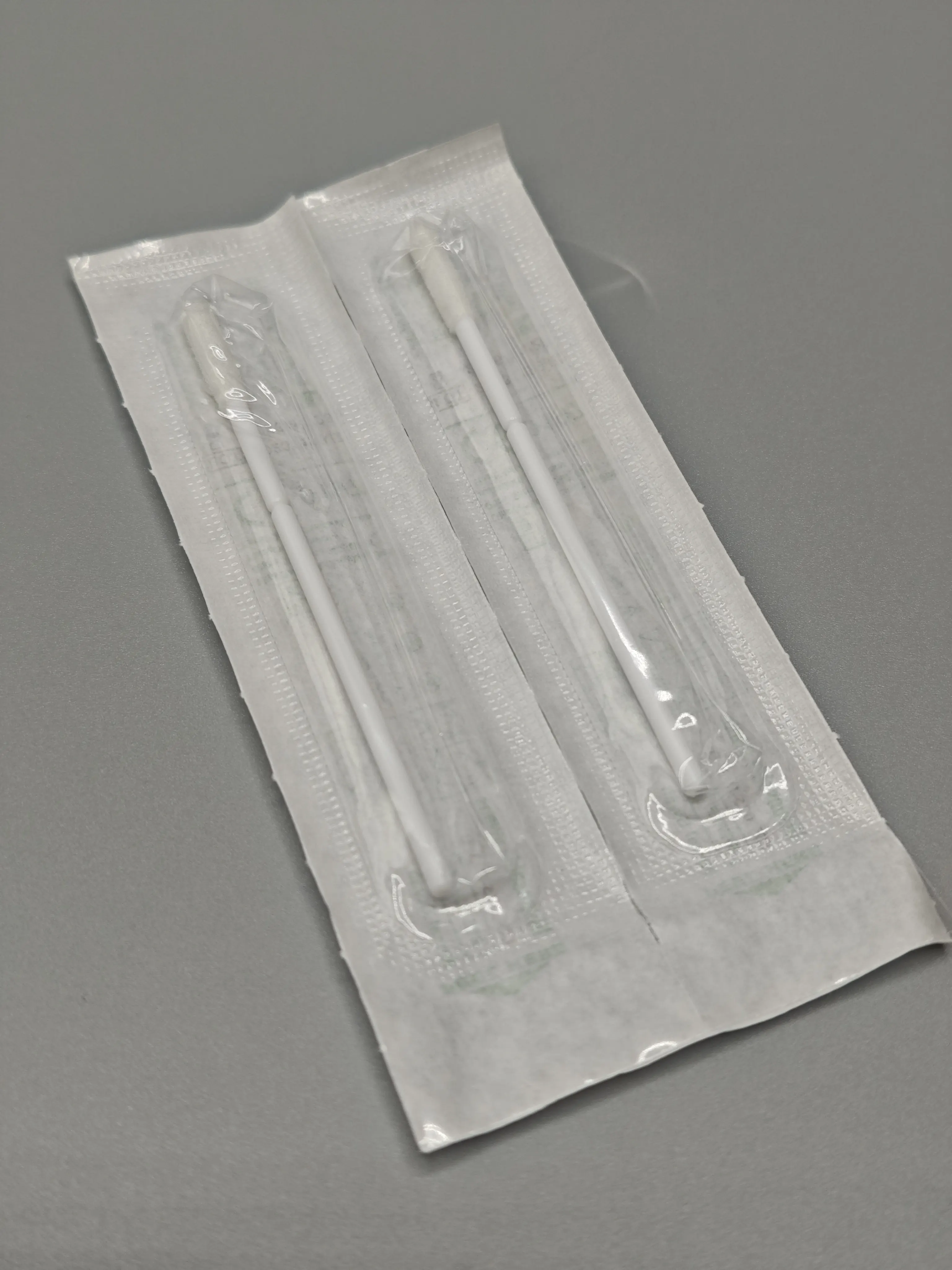
How Viral Sampling Swabs Enable Accurate and Reproducible Pathogen Detection
Nucleic Acid Capture Mechanisms: Why Swab Material and Surface Architecture Matter
Modern viral sampling swabs rely on a dual mechanism: efficient capture of viral particles from mucosal surfaces, followed by rapid, complete release into transport medium for nucleic acid testing. Flocked swabs—engineered with millions of perpendicular nylon fibers—create a high-surface-area mesh that leverages capillary action to collect virus-laden fluid and epithelial cells. This architecture maximizes sample volume while enabling rapid elution: over 80% of captured material is released into suspension, compared with just 20–40% for traditional fiber-wound rayon tips. Research confirms surface area directly correlates with pathogen recovery (West et al., 2022), highlighting how physical design governs analytical sensitivity. In contrast, spun-rayon swabs feature a disordered fiber matrix that can physically entrap viruses and host cells, reducing the quantity of amplifiable nucleic acid available for PCR. By standardizing fiber orientation and density, flocked swabs deliver a consistent, reproducible interface between clinician and patient—minimizing inter-operator variability and preserving critical viral nucleic acids from collection through analysis.
Flocked vs. Rayon vs. Synthetic Swabs: Comparative Performance in Viral Recovery
Diagnostic accuracy in respiratory pathogen detection hinges on a swab’s ability to recover intact, amplifiable viral particles. The three most common types differ markedly in performance:
| Swab Type | Material / Architecture | Viral Recovery Efficiency | Elution Characteristics | Typical Use Cases |
|---|---|---|---|---|
| Nylon Flocked Swab | Perpendicular nylon fibers on a solid tip | Very high (>80% release) | Rapid, nearly complete release in a few seconds | Nasopharyngeal, oropharyngeal, COVID‑19, influenza screening |
| Rayon‑fiber Swab | Spun rayon filaments wound around a shaft | Low–moderate (20–40% release) | Slow, incomplete release; organisms may remain trapped | Older clinical settings, general specimen collection |
| Synthetic Foam Swab | Open‑cell polyurethane foam | Moderate–high (50–70% release) | Gradual release; may require longer elution times | Absorbent sampling, environmental surface collection |
Flocked swabs achieve superior recovery not only through increased surface area but also via hydrophilic surface chemistry optimized for both adsorption and desorption. A landmark 2010 study demonstrated that nylon flocked swabs improved pathogen detection sensitivity by nearly 30% versus rayon—primarily due to faster, more complete elution kinetics (Verhoeven et al., 2010). While synthetic foam swabs outperform rayon, their porous structure retains a portion of the sample, limiting yield. For high-sensitivity clinical and surveillance applications—especially where low viral loads are expected—flocked swabs remain the evidence-supported gold standard.
Validated Collection Methods: Matching Viral Sampling Swabs to Clinical and Surveillance Needs
Nasopharyngeal vs. Anterior Nasal vs. Self-Collection: Trade-offs in Sensitivity, Compliance, and Scalability
Nasopharyngeal (NP) sampling remains the reference method for respiratory pathogen detection, offering the highest sensitivity—particularly when viral load is low. Performed by trained clinicians using flexible flocked swabs, NP collection maximizes cellular yield and viral release. Yet its invasiveness and reliance on skilled personnel constrain scalability during surges. Anterior nasal (AN) sampling—typically mid-turbinate—is less uncomfortable and readily self-administered. Studies show AN swabs achieve 85–95% of NP sensitivity in symptomatic individuals, though performance dips modestly in asymptomatic cohorts (CDC, 2022). Self-collection using AN swabs or saliva-based methods removes clinical bottlenecks entirely, dramatically increasing throughput and community engagement. When paired with brief instruction, self-collection enables mass testing at scale. The trade-off is clear: while self-collected AN samples may miss 5–15% of low-level positives relative to NP, the gains in access, frequency, and feasibility often outweigh this limitation—especially for population-level screening and early outbreak detection.
Pooled Sampling Protocols Using Viral Sampling Swabs for High-Throughput Screening
Pooled testing—combining multiple individual swab specimens into a single assay—amplifies laboratory capacity without extending turnaround time. Each sample is collected using a dedicated, validated viral sampling swab, then expressed into a shared tube of compatible transport medium. Pool sizes typically range from 5 to 20, calibrated to local prevalence and assay detection limits. A peer-reviewed validation study found that pooling 10 anterior nasal swabs reduced sensitivity by only 3–6% compared to individual PCR—even near the assay’s lower limit of detection (PLOS ONE, 2021). Success depends on using swabs and media approved for eSwab or equivalent systems; incompatible combinations risk nucleic acid degradation. Positive pools trigger reflex retesting of individual samples; negative pools clear all contributors at once. This strategy conserves reagents, lowers cost per test, and supports routine surveillance in schools, workplaces, and congregate living facilities. Its real-world efficacy relies on standardized collection technique and timely transport—both essential to preserve nucleic acid integrity prior to processing.
Real-World Optimization of Viral Sampling Swabs: Stability, Logistics, and Best Practices
Room-Temperature Transport Media Compatibility and Viral RNA Stability Data
Viral RNA integrity depends critically on the compatibility between swab type and transport medium. Guanidine-salt-based universal transport media (UTM) and viral transport media (VTM) inactivate pathogens and inhibit ribonucleases, enabling stable ambient-temperature storage. CDC evaluations confirm SARS-CoV-2 RNA remains detectable in UTM for up to 14 days—with less than a 1-log10 reduction in viral load—while influenza A RNA demonstrates 10-day stability under identical conditions. Flocked swabs significantly outperform rayon in these systems: their engineered architecture enhances elution efficiency, yielding higher nucleic acid recovery even after extended storage. Mismatched swab–medium pairings, however, accelerate RNA degradation—studies report up to 50% greater loss within 48 hours when non-validated combinations are used (Li et al., 2020). Regulatory guidance—including WHO recommendations—emphasizes using only pre-qualified swab–medium pairs validated in controlled stability studies. In resource-limited or decentralized settings, selecting such a validated pairing is non-negotiable for maintaining diagnostic fidelity when cold-chain logistics are unavailable.
Step-by-Step Best Practices for Clinicians and Field Teams Using Viral Sampling Swabs
- Pre-collection preparation: Verify swab–medium compatibility per assay validation guidelines; flocked nylon swabs with UTM or VTM are strongly recommended.
- Collection technique: Follow protocol precisely—insert to target depth (e.g., NP: until resistance at posterior wall; AN: mid-turbinate), rotate gently for 5–10 seconds, withdraw without touching external surfaces.
- Immediate transfer: Place swab into transport medium within 30 seconds; break or cut shaft at score line to ensure secure, leak-proof closure.
- Labeling and documentation: Record patient ID, collection date/time, and swab type directly on the tube; use barcode labels to support automated tracking in high-volume workflows.
- Storage and shipping: Store at 2–8°C if processing occurs within 72 hours; freeze at –70°C for longer-term archiving. Only deviate from cold-chain requirements if room-temperature stability has been formally validated for the specific swab–medium–pathogen combination.
- Quality assurance: Conduct regular competency assessments; use mock specimens to audit collection technique, handling fidelity, and chain-of-custody compliance.
FAQ
- What is the difference between flocked and rayon swabs? Flocked swabs have perpendicular nylon fibers that maximize sample collection and release, while rayon swabs use spun fibers that can trap viruses, reducing detection sensitivity.
- Why are flocked swabs preferred for COVID-19 testing? Flocked swabs are highly effective at collecting and releasing viral material, making them ideal for high-sensitivity pathogen detection.
- Are self-collected swab samples reliable? Yes, anterior nasal swabs for self-collection achieve over 85% sensitivity compared to clinician-collected nasopharyngeal swabs, especially in symptomatic individuals.
- What are the advantages of pooled testing? Pooled testing lowers costs and saves reagents while maintaining efficiency and scalability, especially during mass testing scenarios.
- How should viral sampling swabs be stored? Swabs should be stored at 2–8°C if processed within 72 hours or frozen at −70°C for long-term storage unless room-temperature stability is validated.