
 EN
EN
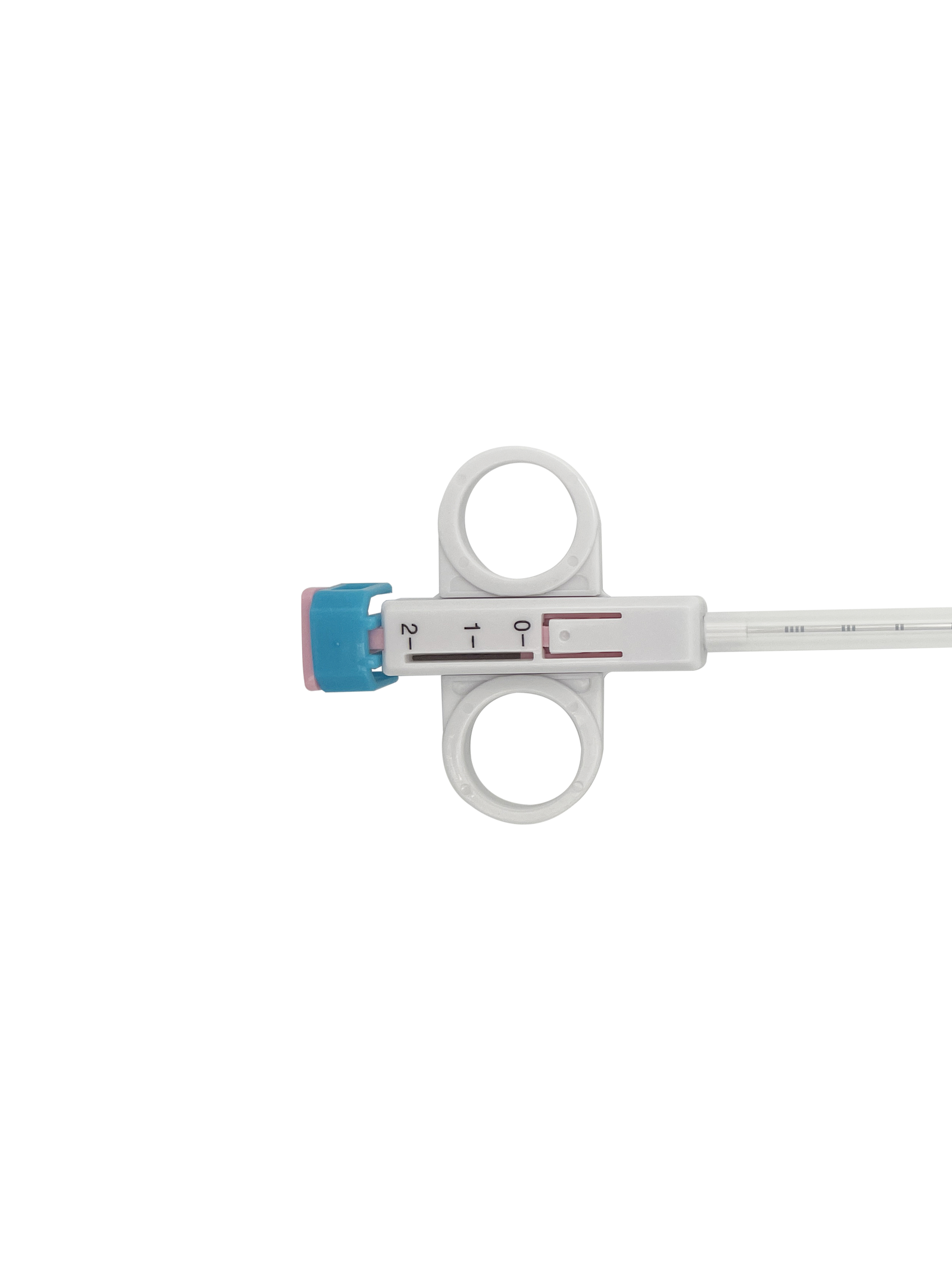
How Automated Biopsy Guns Work — and Where Failures Originate
Core Mechanisms: Spring-Driven vs. Pneumatic Actuation and Their Reliability Profiles
Automated biopsy guns capture tissue samples through rapid, synchronized advancement and retraction of inner and outer needles. Two primary actuation methods dominate clinical use: spring-driven and pneumatic systems—each with distinct reliability trade-offs.
Spring-driven devices rely on a pre-tensioned mechanical spring to propel the inner needle forward and then the outer cannula. Their simplicity—fewer moving parts and no external gas supply—makes them inherently resistant to fluid leaks and well-suited for single-use applications. However, repeated cycling induces metal fatigue, gradually diminishing firing force and resulting in inconsistent penetration depth. Pneumatic systems, typically integrated into reusable platforms, use compressed CO₂ or air to drive needle motion. They offer tunable velocity and force—advantageous across variable tissue densities—but depend critically on precise pressure regulation. Even minor seal degradation or tubing micro-leaks can cause misfires or incomplete actuation.
A 2022 reliability analysis found spring-driven systems exhibited a 12% failure rate after 500 actuations, primarily due to progressive loss of spring energy; pneumatic systems showed a 9% failure rate, largely attributable to seal wear (MedTech Reliability 2022). Maintenance protocols must reflect these differences: spring mechanisms require periodic visual and functional inspection for fatigue, while pneumatic units demand scheduled seal replacement and pressure calibration.
Top Failure Modes: Jamming, Firing Inconsistency, and Core Shearing Explained
Three failure modes most frequently compromise diagnostic yield: jamming, firing inconsistency, and core shearing.
Jamming occurs when tissue debris, a bent stylet, or insufficient lubrication obstructs needle travel—halting the firing sequence mid-procedure. This forces manual needle withdrawal, risking sample damage and procedural delay.
Firing inconsistency, marked by variable propulsion force across successive shots, stems from spring fatigue, pneumatic pressure drift, or accumulated friction in guide rails or bushings. It directly causes non-uniform core lengths—some too short for histopathologic evaluation.
Core shearing, or incomplete tissue transection, arises from dull needle tips, misalignment between inner and outer needles, or inadequate cutting speed. A 2023 clinical review identified shearing as the cause of 18% of non-diagnostic biopsies (Diagnostic Pathology 2023). Left unaddressed, all three failures increase the need for repeat procedures—elevating patient discomfort, procedural time, and cost.
Prevention hinges on disciplined maintenance: routine needle sharpening or replacement, verification of needle alignment before each use, and validation of consistent actuation force through periodic device testing.
Real-Time Troubleshooting of Needle Performance Issues
When an automated biopsy gun fails to deliver a diagnostic sample, rapid differentiation between gun-level faults and needle-specific issues is essential to avoid unnecessary device swaps and minimize patient risk. Many performance problems—including incomplete core retrieval and tissue crush—are rooted not in the actuation mechanism, but in the physical characteristics of the needle itself.
Clinicians can often resolve these at the bedside by assessing gauge selection and bevel integrity. For instance, using an undersized needle in dense or fibrous tissue increases fragmentation risk, while a damaged or misoriented bevel can deflect off the target or crush rather than cleanly cut tissue. Immediate verification of proper needle seating, bevel orientation, and hub alignment enables timely correction—preserving procedural flow and diagnostic confidence.
Incomplete Core Retrieval and Tissue Crush: Causes Linked to Needle Gauge and Bevel Design
Incomplete core retrieval most commonly results from mismatched needle gauge and tissue density. A 20-gauge needle, for example, produces a narrower core more prone to fragmentation in fibrous lesions—especially when combined with suboptimal bevel geometry. The specimen trough length and bevel angle significantly influence cutting efficiency: excessively steep bevels tend to advance tissue rather than incise it cleanly, introducing crush artifact at the core margins. Lower-quality bevels with microscopic burrs further compromise tissue architecture by tearing instead of shearing.
During real-time troubleshooting, operators should confirm full needle seating and correct bevel orientation—an improperly aligned bevel may cause glancing contact and yield empty or distorted specimens. While modern guns with adjustable penetration depth can partially offset gauge-related limitations, any visible bevel damage necessitates immediate needle replacement.
Impact of Automated Biopsy Gun Performance on Diagnostic Accuracy
The integrity of the tissue core is foundational to diagnostic accuracy—imperfect retrieval introduces sampling error that can directly lead to misdiagnosis. In the U.S., diagnostic inaccuracies contribute to an estimated 40,000–80,000 deaths annually, with inadequate tissue sampling representing a clinically significant contributor (PRNewswire 2024). As laboratories increasingly adopt digital pathology and AI-assisted interpretation, the importance of high-fidelity, architecturally intact cores grows—automation downstream cannot compensate for upstream sampling defects. Ensuring every core meets minimum dimensional and structural standards is therefore not merely a technical requirement, but a critical safeguard against false-negative outcomes and a cornerstone of clinical trust.
Sampling Error and False-Negatives: How Suboptimal Core Length (<20 mm) Lowers Malignancy Detection
Core length below 20 mm is a well-established predictor of false-negative biopsy results. Specimens shorter than this threshold frequently lack the architectural breadth needed to assess invasive patterns, tumor heterogeneity, or transitional zones—key determinants in malignancy classification. A 2023 retrospective analysis demonstrated that cores <20 mm increased false-negative rates by up to 28% compared to those exceeding 20 mm (J. Clin. Pathol. 2023). The underlying mechanism is sampling bias: short cores may inadvertently capture only benign periphery while missing the lesion’s malignant center.
This effect is amplified by needle design choices—finer-gauge needles, for instance, produce thinner cores more vulnerable to crush artifact and fragmentation under compression. Consistent delivery of ≥20 mm cores thus represents a fundamental performance benchmark for automated biopsy guns. Achieving it reliably reduces sampling error, improves diagnostic yield, and mitigates the potentially life-threatening consequences of undetected malignancy.
Safety-Critical Design Features That Prevent Operator Error
Modern automated biopsy guns integrate multiple passive safety features to reduce reliance on operator vigilance alone—particularly under time pressure or in high-acuity settings.
Color-coded needle hubs and asymmetrical mounting interfaces prevent incorrect attachment of incompatible needle types. Interlocking safety triggers enforce a deliberate two-step activation process—such as disengaging a physical lock before pressing the firing button—to eliminate accidental discharge. Audible and tactile feedback (e.g., a distinct click upon full needle seating) confirms proper assembly, while transparent windows showing cocked-spring status provide immediate visual verification of readiness—preventing dry firing.
Depth-stop mechanisms physically block trigger engagement unless the needle is positioned at the intended depth, reducing both sampling error and risk of organ injury. Automatic post-firing needle retraction eliminates manual reset steps, substantially lowering the incidence of needlestick injuries.
Together, these embedded safeguards transform the biopsy gun from a tool requiring constant attention into a fail-safe instrument—one where correct usage is structurally enforced, not merely instructed.
FAQ
What are the common actuation methods in automated biopsy guns? Automated biopsy guns typically use spring-driven or pneumatic systems, each with unique reliability trade-offs.
How do spring-driven systems compare with pneumatic systems? Spring-driven devices are simpler, more resistant to fluid leaks, and better for single-use applications, but suffer from metal fatigue over time. Pneumatic systems offer tunable velocity and force but require precise pressure regulation and more maintenance.
What causes jamming in biopsy guns? Jamming can result from tissue debris, a bent stylet, or lack of lubrication obstructing needle movement.
Why is core length crucial in biopsy accuracy? Core length below 20 mm often fails to capture invasive patterns or malignancies, leading to false negatives. Larger cores ensure comprehensive tissue analysis.
How do passive safety features improve biopsy gun performance? Safety features like interlocking triggers and color-coded hubs reduce operator error and ensure safe, consistent usage even under high pressure.
Table of Contents
-
How Automated Biopsy Guns Work — and Where Failures Originate
- Core Mechanisms: Spring-Driven vs. Pneumatic Actuation and Their Reliability Profiles
- Top Failure Modes: Jamming, Firing Inconsistency, and Core Shearing Explained
- Real-Time Troubleshooting of Needle Performance Issues
- Incomplete Core Retrieval and Tissue Crush: Causes Linked to Needle Gauge and Bevel Design
- Impact of Automated Biopsy Gun Performance on Diagnostic Accuracy
- Sampling Error and False-Negatives: How Suboptimal Core Length (<20 mm) Lowers Malignancy Detection
- Safety-Critical Design Features That Prevent Operator Error
- FAQ