
 EN
EN
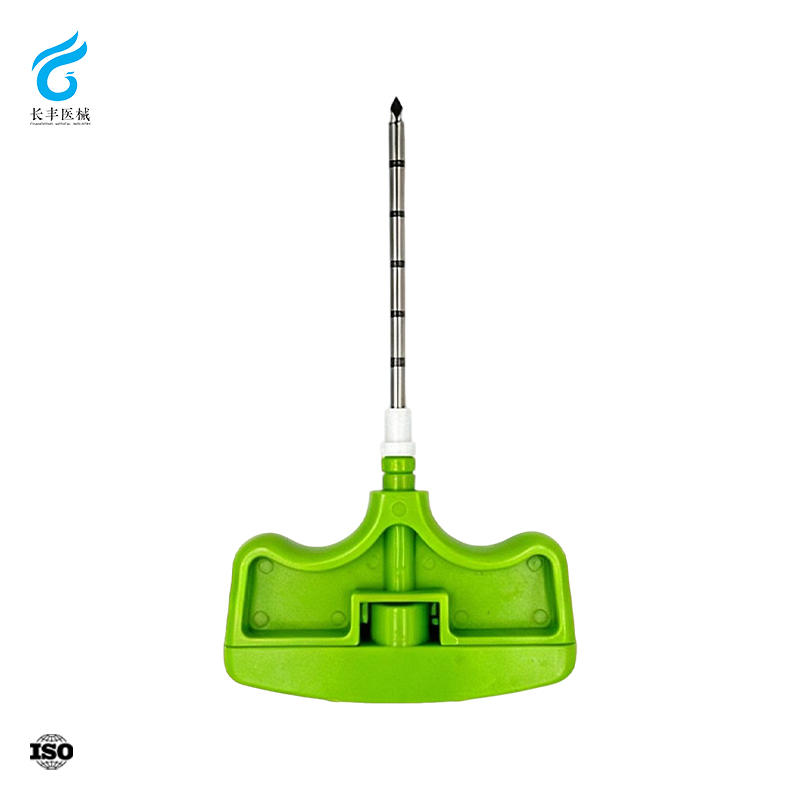
Precision Thermal Control: Minimizing Lateral Spread and Unintended Tissue Damage
Thermal physics of RF energy delivery and how needle geometry confines heat
Radiofrequency (RF) energy generates heat through ionic agitation within tissue—not by direct electrode heating. Current density is highest at the needle tip, where a small surface area concentrates energy and creates a steep thermal gradient. Needle geometry is the primary engineering lever for controlling this gradient: conical or sharpened tips focus current into a tight zone, while larger surface areas disperse it, reducing peak temperature. The adjacent tissue acts as a resistive element, converting electrical energy into thermal energy precisely where needed. Shaft insulation further confines energy to the tip, preventing lateral spread to the dermis and subcutaneous fat. This targeted confinement ensures the thermal lesion remains within the intended anatomical plane—safeguarding nerves, glands, and blood vessels. Although tissue impedance and thermal conductivity influence lesion shape, needle design remains the most controllable variable for achieving reproducible, confined coagulation. By matching electrode length, diameter, and insulation to treatment depth, clinicians minimize lateral spread and protect surrounding structures—a foundational requirement for safe, effective skin remodelling.
Cooled-tip and perfusion electrode designs: Evidence for reduced fat necrosis and scarring
Cooled-tip RF needles use internal fluid circulation to lower the electrode–tissue interface temperature, preventing charring and carbonization while enabling deeper, more homogeneous thermal penetration. Perfusion electrodes achieve similar effects by infusing saline through the needle tip to enhance local conductivity and provide active cooling. Both strategies maintain adipose tissue temperatures below the threshold for irreversible adipocyte injury—reducing fat necrosis risk. Histological evidence shows cooled-tip designs produce sharply demarcated coagulation zones with minimal dermal injury and significantly less fat cell vacuolization than standard monopolar needles. Clinically, this translates to fewer palpable nodules, lower rates of hypertrophic scarring, and shorter durations of post-treatment erythema. Controlled cooling also permits higher energy delivery for robust collagen denaturation without compromising safety. By mitigating temperature spikes that cause charring and unintended fat necrosis, these advanced electrode configurations make RF microneedling more predictable and clinically forgiving across diverse skin types.
Consistent Lesion Formation: Overcoming Heat Sink Effect and Charring with Optimized Radiofrequency Needles
Quantifying vascular heat sink impact and multi-tined needle compensation strategies
The heat sink effect—where nearby blood flow dissipates thermal energy—is a major barrier to uniform lesion formation. Research shows even moderate flow in vessels as small as 3 mm can reduce ablation volume by 30–50% (Ahmed and Goldberg, 2011). This convective cooling leads to irregular lesions, residual disease near vessels, and higher local recurrence. Multi-tined RF needles overcome this by deploying an array of electrodes that generate overlapping ablation fields. These multiple current pathways create a broader, more resilient thermal zone capable of “encircling” vessels and resisting convective heat loss. Temperature-controlled algorithms paired with multi-tined arrays sustain target temperatures longer, compensating for cooling. In ex-vivo and in-vivo models, these systems increased ablation volume adjacent to simulated vessels by 35–42% compared to single-electrode configurations (Goldberg et al., 2000). This strategy preserves intended lesion geometry—even in highly vascularized tissue—directly improving oncologic outcomes.
Achieving predictable lesion size: Multi-tined vs. monopolar radiofrequency needles in human tissue
Predictable lesion size is essential for complete tumor ablation and minimizing collateral damage. Monopolar RF needles produce elliptical ablation zones with limited diameter due to radial current spread and early tissue desiccation. In contrast, multi-tined electrodes leverage inter-electrode field interactions to generate larger, more spherical lesions. A comparative study in human tissue found multi-tined needles achieved ablation diameters of 4.2 cm ± 0.3 cm, versus 2.8 cm ± 0.4 cm for monopolar devices under identical energy settings (Goldberg et al., 2000). The spherical geometry is especially valuable for irregular tumors and those near organ margins, reducing reliance on overlapping ablations. Additionally, multi-tined systems support real-time impedance monitoring and dynamic power modulation—preventing charring-induced insulation and abrupt lesion arrest. These capabilities yield lower repeat procedure rates and more confident treatment margins, establishing multi-tined RF needles as a reliable standard for consistent lesion formation in clinical practice.
Enhancing Safety and Efficiency in Radiofrequency Microneedling Procedures
Reducing burns, scarring, and nerve injury through impedance feedback and standardized dwell time protocols
RF microneedling combines mechanical micro-injury with controlled thermal energy to stimulate collagen remodeling—but imprecise delivery risks burns, scarring, and nerve injury. Modern RF needles integrate real-time impedance feedback, continuously monitoring tissue resistance. As impedance rises due to desiccation or coagulation, the system automatically reduces power—preventing uncontrolled heat buildup. This closed-loop control significantly lowers thermal injury risk. Paired with standardized dwell time protocols—predefined energy application durations per insertion point—this ensures consistent lesion formation without overtreatment. Clinical data show combining impedance monitoring with fixed dwell times reduces post-procedure erythema and scarring by over 40% compared to manual energy delivery. These protocols also mitigate nerve injury by limiting energy deposition near sensitive structures. Automation shortens procedure times, eliminates constant operator vigilance, and improves practice economics. Embedding these safeguards enables safer, more predictable treatments—enhancing patient comfort, accelerating recovery, and supporting broader adoption of RF microneedling in aesthetic practices.
Accelerating Adoption: Addressing Regulatory, Platform, and Economic Barriers to Radiofrequency Needle Integration
FDA clearance timelines and design innovation bottlenecks for next-generation radiofrequency needles
Regulatory approval for RF needles typically follows the 510(k) pathway, requiring demonstration of substantial equivalence to a predicate device—a process that often takes 6–12 months. Iterative design improvements—such as novel electrode coatings or refined tip geometries—can trigger additional review cycles, extending time-to-market by 4–6 months per iteration. This creates a structural bottleneck: manufacturers must freeze designs early for submission, even as emerging clinical evidence calls for rapid refinement. The result is a persistent gap between validated concepts and commercially available next-generation needles. Pre-submission meetings with the FDA and greater use of consensus standards—particularly for thermal performance metrics—could reduce regulatory uncertainty, but industry adoption of these proactive strategies remains inconsistent.
Platform compatibility constraints and their impact on global accessibility and cost-effectiveness
RF needles are rarely standalone tools; they require integration with proprietary generators and impedance-monitoring systems. Proprietary connectors and software protocols lock clinics into full-platform purchases, inflating capital costs by 30–50% compared to open-system alternatives. This vendor lock-in limits global accessibility—especially in cost-sensitive markets where replacing existing generators is financially prohibitive. Even within compatible platforms, software updates or minor firmware changes can disrupt energy delivery, raising safety concerns. Standardizing communication interfaces and adopting universal handpiece protocols would enable modular component selection, lower per-procedure costs, and accelerate adoption. Without such interoperability, high-quality RF needle treatments remain concentrated in well-resourced facilities—exacerbating health disparities and constraining overall market growth.
Frequently Asked Questions
What is the heat sink effect in RF energy delivery?
The heat sink effect refers to the phenomenon where nearby blood flow dissipates thermal energy, reducing the effectiveness and uniformity of lesion formation.
How do cooled-tip and perfusion RF needles improve treatment outcomes?
Cooled-tip needles use internal fluid circulation to lower tissue interface temperatures, while perfusion needles infuse saline for cooling and enhanced conductivity. Both strategies reduce fat necrosis, scarring, and enable deeper thermal penetration.
Why are multi-tined RF needles preferred over monopolar designs?
Multi-tined RF needles produce larger, more spherical lesions due to overlapping ablation fields. They are better suited for irregular tumors and areas near vascular structures, ensuring consistent lesion formation.
How do RF microneedling devices mitigate burns and scarring?
Modern RF devices use real-time impedance feedback and standardized dwell times to prevent uncontrolled heat buildup, reducing the risk of burns, scarring, and nerve damage.
What regulatory challenges affect the adoption of RF needle technology?
Regulatory approval delays, such as those tied to iterative design improvements, often extend time-to-market for next-generation RF needles. Pre-submission meetings and consensus standards can help speed up the approval process.
Table of Contents
- Precision Thermal Control: Minimizing Lateral Spread and Unintended Tissue Damage
- Consistent Lesion Formation: Overcoming Heat Sink Effect and Charring with Optimized Radiofrequency Needles
- Enhancing Safety and Efficiency in Radiofrequency Microneedling Procedures
- Accelerating Adoption: Addressing Regulatory, Platform, and Economic Barriers to Radiofrequency Needle Integration
-
Frequently Asked Questions
- What is the heat sink effect in RF energy delivery?
- How do cooled-tip and perfusion RF needles improve treatment outcomes?
- Why are multi-tined RF needles preferred over monopolar designs?
- How do RF microneedling devices mitigate burns and scarring?
- What regulatory challenges affect the adoption of RF needle technology?