
 EN
EN
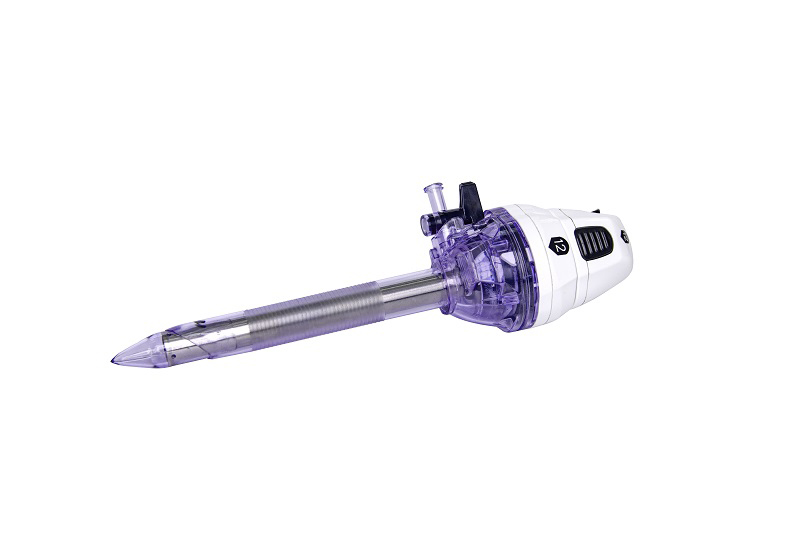
Clinical Rationale: Why the 8mm Disposable Laparoscopic Trocar Is Optimally Positioned
The 8mm disposable laparoscopic trocar occupies a clinically advantageous niche—balancing minimal tissue disruption with the functional demands of modern laparoscopic surgery. Its diameter reduces the fascial defect size compared to larger 10–12 mm ports, directly lowering the risk of port-site hernia formation, a complication reported in up to 1.5% of procedures using those larger trocars (SAGES 2022). At the same time, the 8mm internal diameter accommodates not only standard 5 mm instruments but also an expanding range of advanced 8 mm devices—including robotic graspers, staplers, and energy instruments—eliminating the need for additional larger ports.
The single-use design ensures optimal sharpness of the cutting tip and integrity of the sealing mechanism, both critical for maintaining stable pneumoperitoneum and minimizing gas leakage. A lightweight cannula with a specialized thread pattern enhances stability within the abdominal wall while reducing lateral movement that could traumatize surrounding tissues. Crucially, disposables eliminate risks tied to inadequate sterilization of reusable trocars—reducing potential surgical site infections—and arrive pre-assembled and ready for immediate use, shortening setup time and accelerating the transition from patient positioning to insufflation.
This convergence of smaller incision size, reliable seal performance, and broad instrument compatibility positions the 8mm disposable trocar as a strategic choice that advances patient safety without sacrificing procedural efficiency.
Value Assessment: Cost, Workflow, and Infection Control Advantages
The 8mm disposable laparoscopic trocar delivers measurable value across three critical dimensions: procedural economics, operational throughput, and infection control reliability. While its per-unit acquisition cost may appear higher than reusable alternatives, a full cost-of-ownership analysis consistently reveals net savings. Reprocessing expenses—including enzymatic cleaning, steam sterilization, labor, equipment maintenance, and quality assurance testing—are eliminated entirely. A 2022 financial review by a multi-hospital health system found that switching to single-use trocars reduced total laparoscopic instrument costs by 18% per case once reprocessing and repair overhead were factored in.
Workflow gains are equally compelling. Pre-sterilized, ready-to-use disposables remove delays associated with instrument set assembly and post-operative reprocessing. Operating room turnover times can shorten by 10–15 minutes when no reusable sharps require handling—enabling an additional procedure block per day in high-volume centers. Simplified inventory management follows naturally: bulk-packed disposables occupy less shelf space and eliminate the need for sterile-processing department queue coordination.
From an infection-control perspective, the single-use design inherently breaks the chain of cross-contamination. Each trocar is individually packaged and terminally sterilized, ensuring every patient receives a device untouched by prior use. Clinical surveillance data link adoption of fully disposable trocar systems with a 30–40% reduction in surgical site infection rates—a benefit attributed to eliminating biofilm formation and inconsistencies inherent in reusable instrument reprocessing.
Together, these economic, logistical, and safety advantages affirm the 8mm disposable trocar as a prudent, value-driven standard for modern laparoscopic suites.
Sizing Strategy: How 8mm Bridges the Gap Between Minimally Invasive Precision and Instrument Compatibility
Surgical teams routinely confront a trade-off: smaller ports reduce tissue trauma but limit instrument options; larger ports support complex instrumentation but increase fascial injury risk. The 8mm disposable laparoscopic trocar resolves this tension by delivering minimally invasive precision and robust instrument compatibility in a single platform.
A 5mm port restricts surgeons to slender graspers and scissors—often necessitating a second, larger port for a 10mm laparoscope or stapler. Conversely, a 10mm port creates a fascial defect demanding meticulous closure, and epidemiologic data confirm each millimeter increase in port size correlates with higher incisional hernia risk. A 2019 analysis of over 3,000 laparoscopic procedures found an 8mm port hernia rate of 1.2%, notably lower than the 3.5% observed with 10mm ports. This 8mm “sweet spot” preserves the low-morbidity profile of mini-laparoscopy while supporting the instrumentation needs of advanced laparoscopy.
With a simple reducer cap, the same 8mm trocar accepts 5mm instruments seamlessly—and many models accommodate 10mm endoscopes and devices via transient seal dilation, removing the need for dedicated larger ports. The result is a single, adaptable port size that maintains triangulation, ergonomics, and procedural flexibility across general, gynecologic, and bariatric cases—where instrument requirements often shift mid-procedure.
Leading manufacturers now integrate bladeless obturators and radial expandable sleeves into 8mm trocars, reducing insertion force by up to 50% and minimizing entry-related injury risk. This precision engineering—combined with the size’s clinical versatility—makes the 8mm disposable trocar a logical default for facilities standardizing port inventory without compromising adaptability.
Safe Implementation: Evidence-Based Placement and Handling Protocols
Adopting the 8mm disposable laparoscopic trocar requires strict adherence to evidence-based placement and handling protocols to mitigate entry-related complications. Visceral and vascular injuries during primary trocar insertion remain among the most catastrophic risks in laparoscopy—and closed claims analyses show a significant proportion of major laparoscopic complications originate at this step. Standardized, technique-driven practices—not individual preference—are essential to reducing preventable harm.
Stepwise fascial insertion technique to prevent trocar-related injury
A controlled, stepwise insertion method is paramount for the 8mm disposable trocar. Begin with a stable abdominal wall lift and a precise skin incision sized for the 8mm diameter. Advance the trocar—equipped with either a bladed or blunt obturator—with steady, controlled pressure and a slight twisting motion to facilitate fascial layer separation rather than tearing. Maintain strict perpendicular trajectory throughout, guided by tactile feedback. Where feasible, optical entry under direct visualization confirms safe passage through each anatomical layer, transforming a traditionally blind maneuver into a visually verified one.
Team-based verification checklist for port-site selection and depth calibration
A standardized, team-based verification checklist serves as a critical safety net before the first incision. This collaborative pause requires explicit confirmation of optimal port-site location—accounting for patient anatomy, prior surgeries, and planned triangulation. The team must audibly verify distance from major vessels (e.g., aorta, iliac arteries) and calibrate anticipated trocar depth against the patient’s body mass index. Internal safety data from a leading provider showed a 40% reduction in entry-related near-misses after implementing this structured pre-insertion timeout—demonstrating how collective verification eliminates unilateral assumptions and strengthens procedural safety.
FAQ
Why is the 8mm diameter optimal for laparoscopic trocars?
The 8mm diameter minimizes tissue injury while accommodating advanced instruments like robotic graspers and staplers, resulting in fewer hernia risks and broad procedural compatibility.
What are the economic advantages of disposable laparoscopic trocars?
Although disposables have higher upfront costs, they eliminate reprocessing expenses and shorten workflow turnaround times, yielding overall net savings across large-scale implementations.
How does standardizing trocar sizes impact surgical outcomes?
Standardizing on 8mm trocars streamlines inventory management while supporting advanced instrumentation needs, reducing complication rates and improving procedural safety.
What safety protocols should be followed for trocar insertion?
Controlled insertion techniques, optical entry, and pre-insertion team-based verification checklists are key to minimizing risks during primary trocar placement.
Table of Contents
- Clinical Rationale: Why the 8mm Disposable Laparoscopic Trocar Is Optimally Positioned
- Value Assessment: Cost, Workflow, and Infection Control Advantages
- Sizing Strategy: How 8mm Bridges the Gap Between Minimally Invasive Precision and Instrument Compatibility
- Safe Implementation: Evidence-Based Placement and Handling Protocols
- FAQ