
 EN
EN
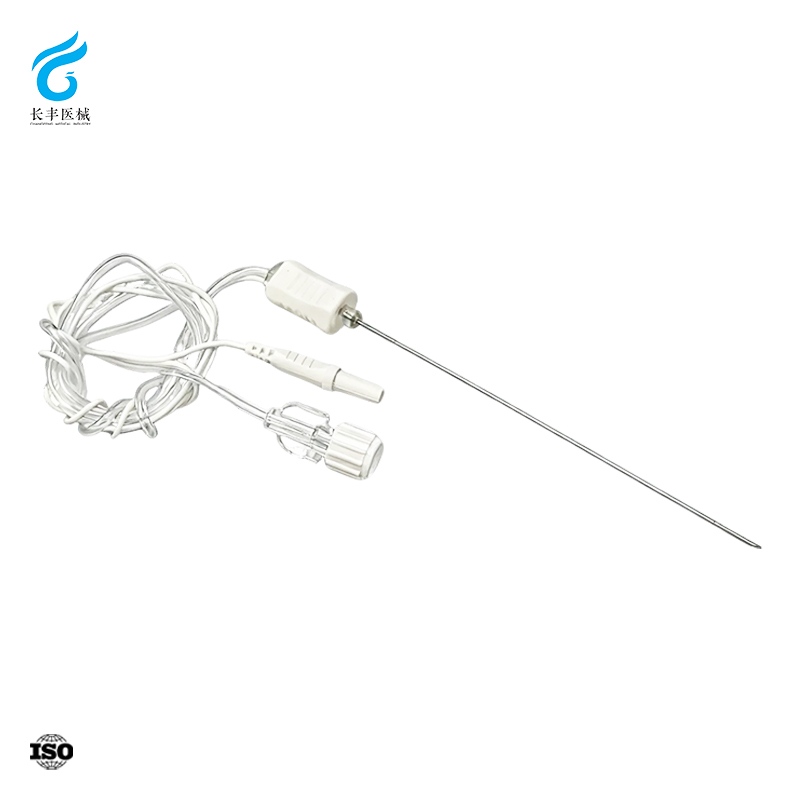
Introduction
Liver biopsy remains an important procedure for evaluating liver diseases, including fibrosis, inflammation, and certain liver tumors. The quality of biopsy samples directly affects pathological interpretation, making the design of the biopsy needle an important factor in achieving consistent results.
Modern liver automatic biopsy needles are developed to improve sampling efficiency, reduce operator variability, and provide more predictable tissue acquisition compared with traditional manual biopsy methods. Understanding how needle mechanisms, gauge selection, and tip design influence sample quality can help healthcare professionals choose suitable biopsy solutions.
How Automatic Biopsy Needle Design Influences Tissue Sample Quality
The mechanical structure of a liver automatic biopsy needle plays an important role in obtaining high-quality tissue samples.
Spring-loaded biopsy systems use stored mechanical energy to rapidly advance the cutting components and collect tissue. Their fast deployment allows efficient sampling and has been widely adopted in clinical practice. However, the rapid movement of the needle may require careful technique, especially when sampling firm or fibrotic liver tissue.
Motor-driven biopsy systems use controlled mechanical movement to advance the cutting mechanism. By providing more consistent needle motion, these systems may help reduce unnecessary mechanical stress on tissue and support preservation of sample structure.
Although different biopsy systems have their own advantages, factors such as needle design, operator experience, and sampling technique all contribute to final specimen quality.
Automated Biopsy Needles and Diagnostic Consistency
Compared with manual biopsy devices, automated liver biopsy needles are designed to provide more standardized needle deployment. This can reduce variations caused by differences in operator hand movement, insertion speed, and sampling technique.
For chronic liver disease evaluation, obtaining sufficient tissue volume and maintaining tissue architecture are important for accurate assessment of fibrosis stage and inflammatory changes. Automated biopsy systems can support consistent sample collection by providing controlled firing and cutting mechanisms.
However, diagnostic quality depends not only on the device itself but also on appropriate patient selection, imaging guidance, and clinical technique.
Selecting the Right Liver Automatic Biopsy Needle: Gauge and Design Considerations
Choosing the correct needle gauge requires balancing tissue requirements and patient safety considerations.
| Gauge | Typical Application | Considerations |
|---|---|---|
| 16G | Situations requiring larger tissue samples | Provides more tissue but requires careful evaluation of bleeding risk |
| 18G | Routine liver biopsy and fibrosis assessment | Commonly selected for balancing sample quality and safety |
| 20G | Cases where a smaller needle size may be preferred | May provide a smaller tissue sample volume |
An 18-gauge liver automatic biopsy needle is commonly used for routine applications because it generally provides adequate tissue volume while maintaining a balanced safety profile.
For patients with complex conditions, including coagulation concerns or challenging biopsy targets, the final needle selection should be based on clinical requirements and physician judgment.
Tip Design and Sampling Accuracy
Needle tip configuration affects how effectively tissue is captured during biopsy procedures.
Coaxial biopsy systems allow the needle to access the target area through a guiding pathway, which can improve needle control and support multiple sampling attempts through a single access route.
Side-notch designs collect tissue through a sampling notch located near the needle tip. These systems are widely used and can provide effective tissue acquisition when properly positioned.
The choice between different designs depends on the biopsy target, imaging guidance method, and clinical preference.
Improving Safety and Reducing Non-Diagnostic Samples
The performance of a liver automatic biopsy needle depends on both device characteristics and procedural technique.
Real-time ultrasound guidance is widely used during liver biopsy because it helps physicians identify the target area, avoid major vessels, and improve needle placement accuracy.
Proper needle advancement technique is also important. Smooth and controlled needle movement can help maintain tissue integrity and reduce the chance of obtaining inadequate samples.
In addition, selecting an appropriate needle type according to the patient's condition can help balance diagnostic requirements with procedural safety.
Frequently Asked Questions
What is a liver automatic biopsy needle?
A liver automatic biopsy needle is a medical device designed to collect liver tissue samples using an automated firing mechanism. It helps provide more consistent sampling compared with traditional manual biopsy methods.
Which gauge is commonly used for liver biopsy?
An 18-gauge biopsy needle is commonly selected for many routine liver biopsy procedures because it provides a practical balance between tissue collection and safety considerations. However, the appropriate gauge depends on the patient's condition and clinical requirements.
Does an automatic biopsy needle improve sample quality?
Automatic biopsy needles can improve sampling consistency by providing controlled needle deployment. However, final sample quality also depends on imaging guidance, operator technique, and the biopsy target.
Why is ultrasound guidance important for liver biopsy?
Ultrasound guidance helps improve targeting accuracy and allows clinicians to avoid nearby vessels and sensitive structures during the biopsy procedure.
Table of Contents
- Introduction
- How Automatic Biopsy Needle Design Influences Tissue Sample Quality
- Automated Biopsy Needles and Diagnostic Consistency
- Selecting the Right Liver Automatic Biopsy Needle: Gauge and Design Considerations
- Tip Design and Sampling Accuracy
- Improving Safety and Reducing Non-Diagnostic Samples
- Frequently Asked Questions